研究の内容From the research
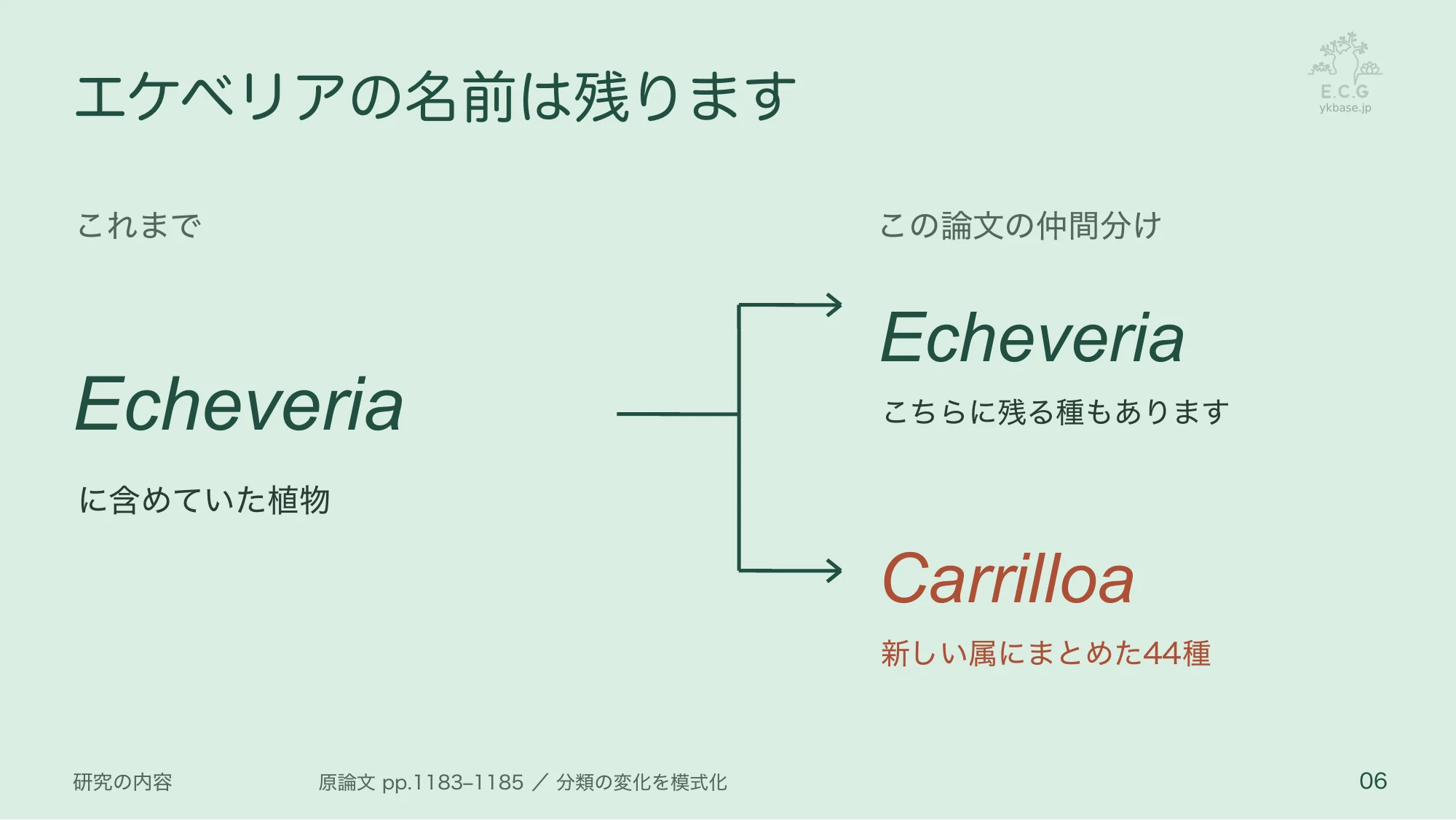
名前はどう変わる?What happens to the names?
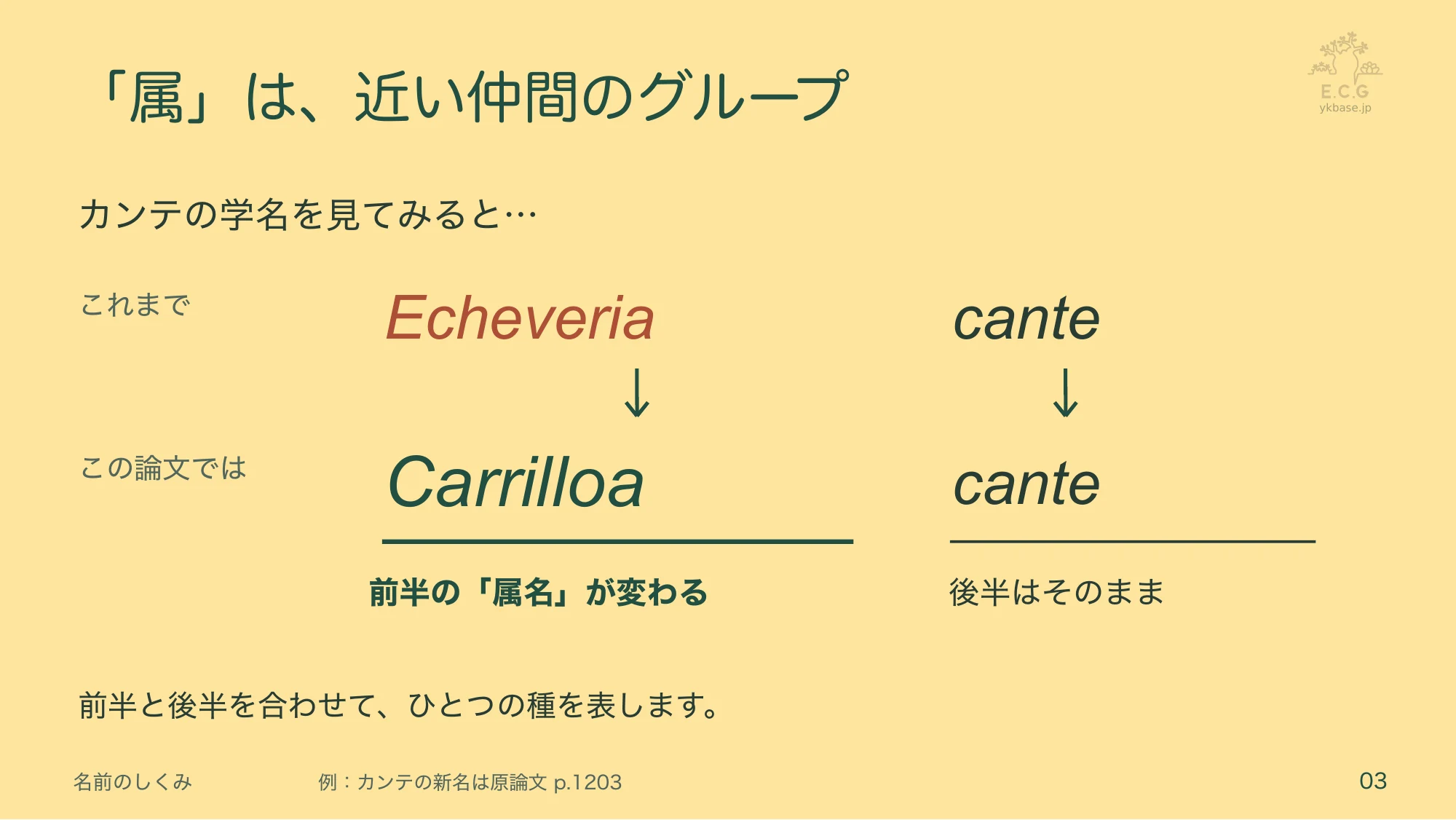
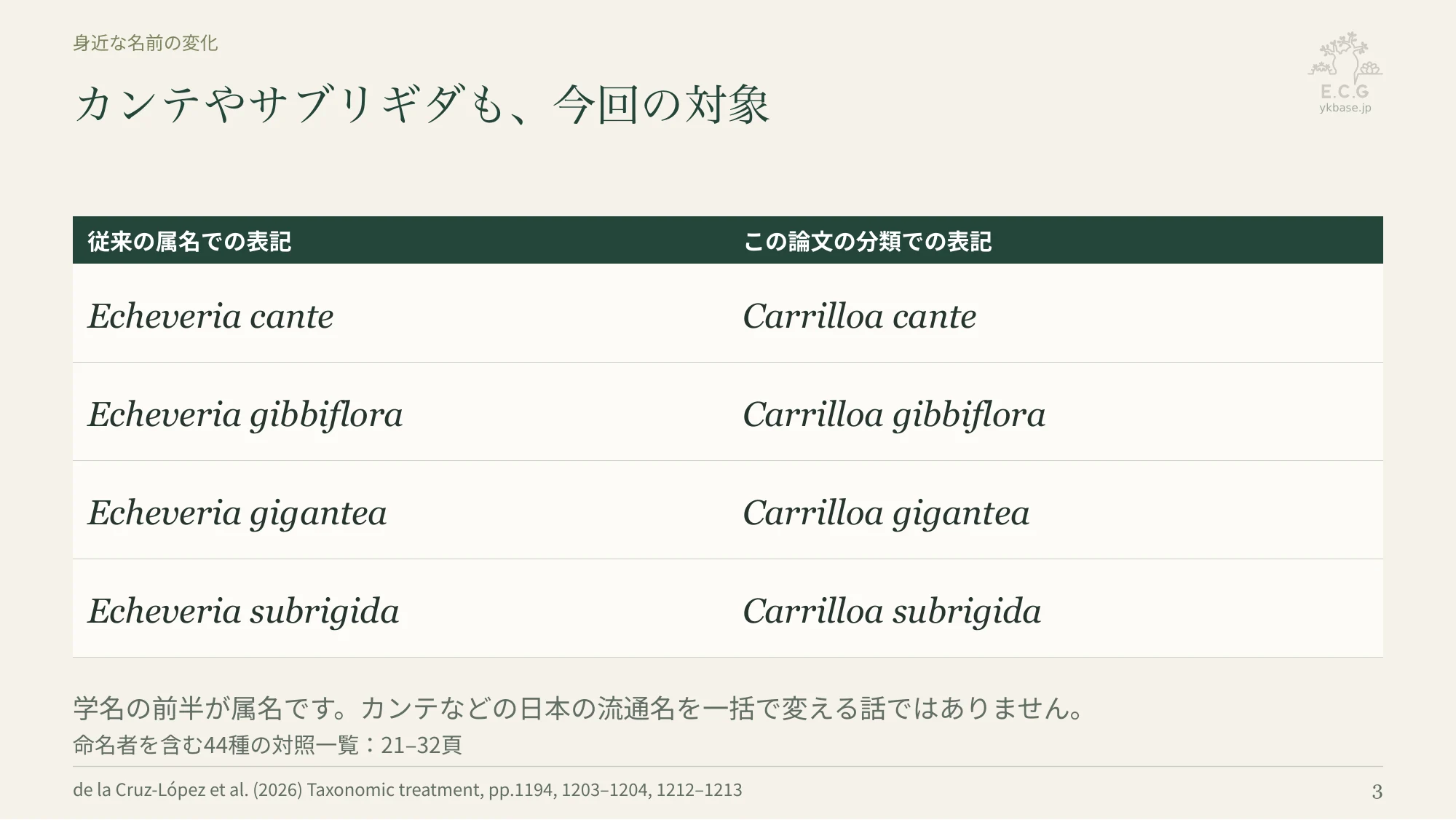
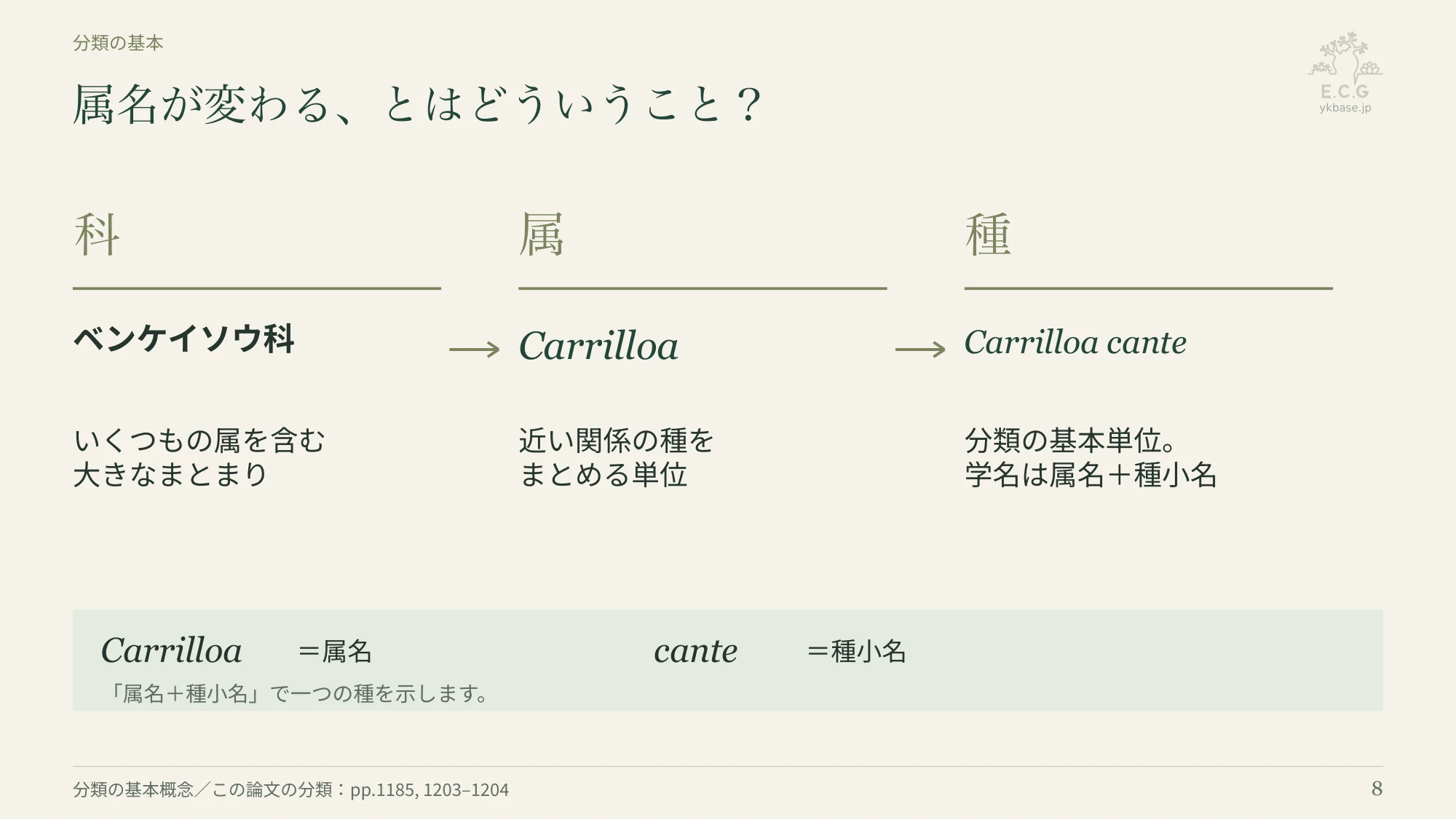
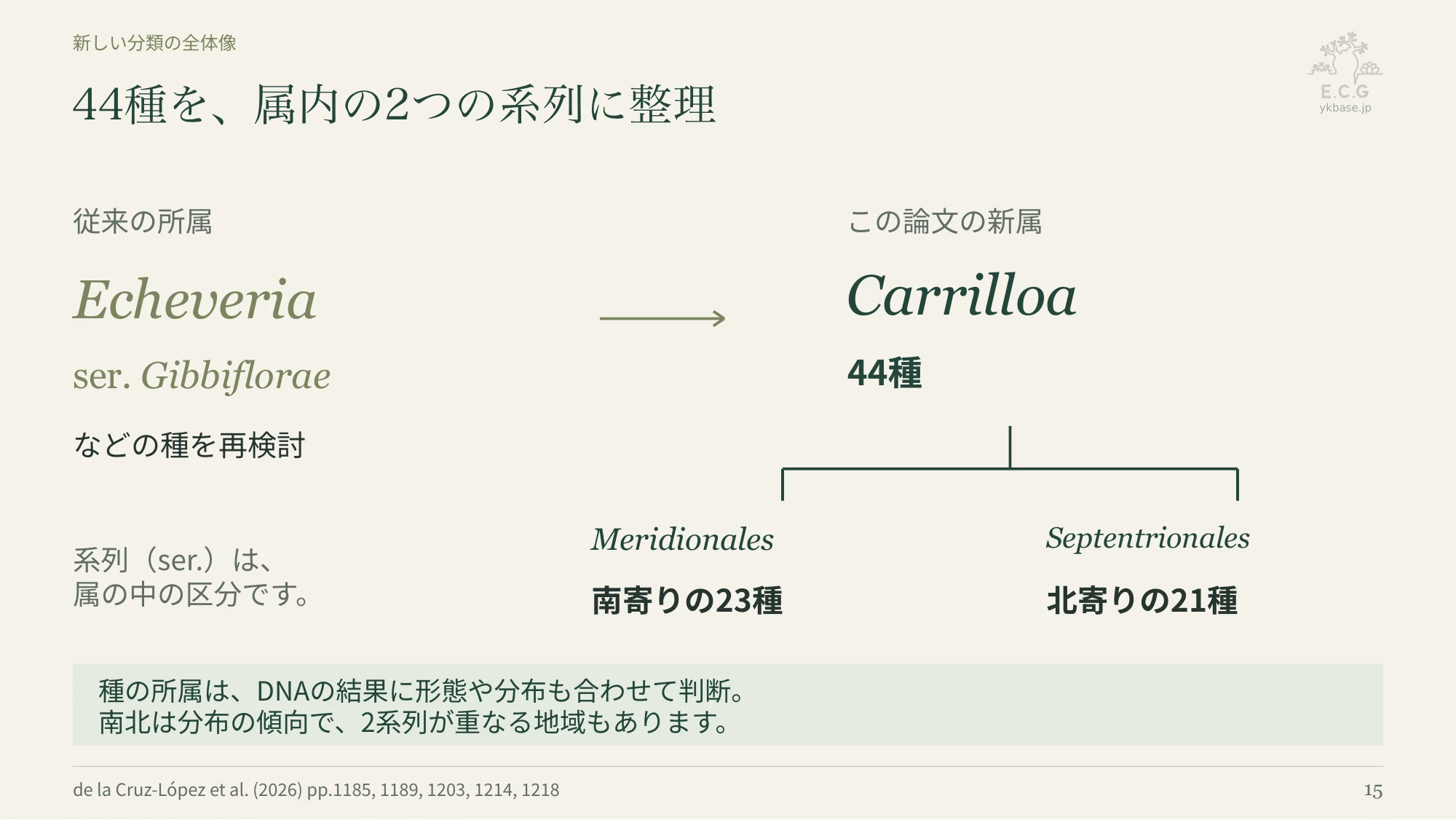
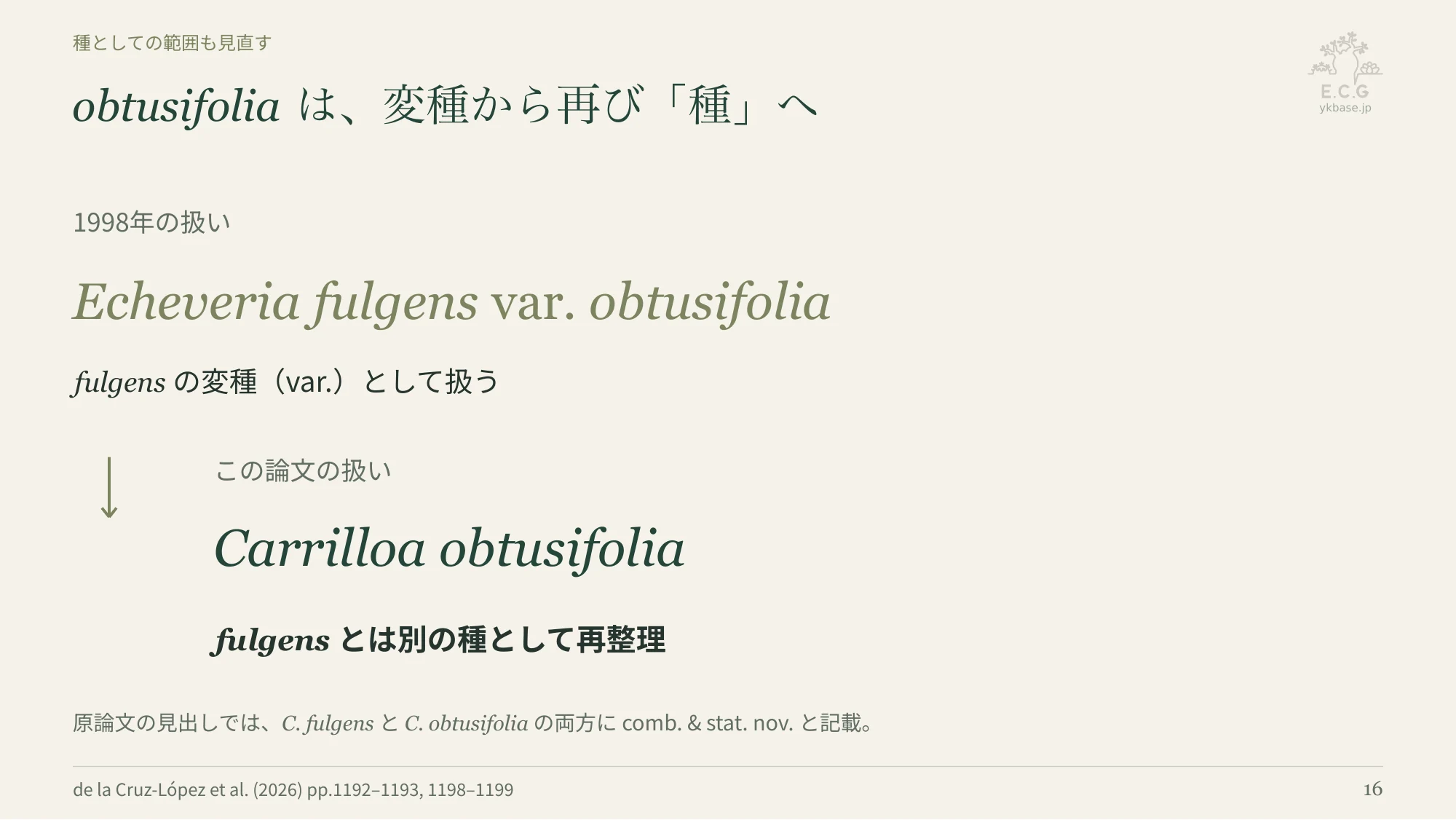
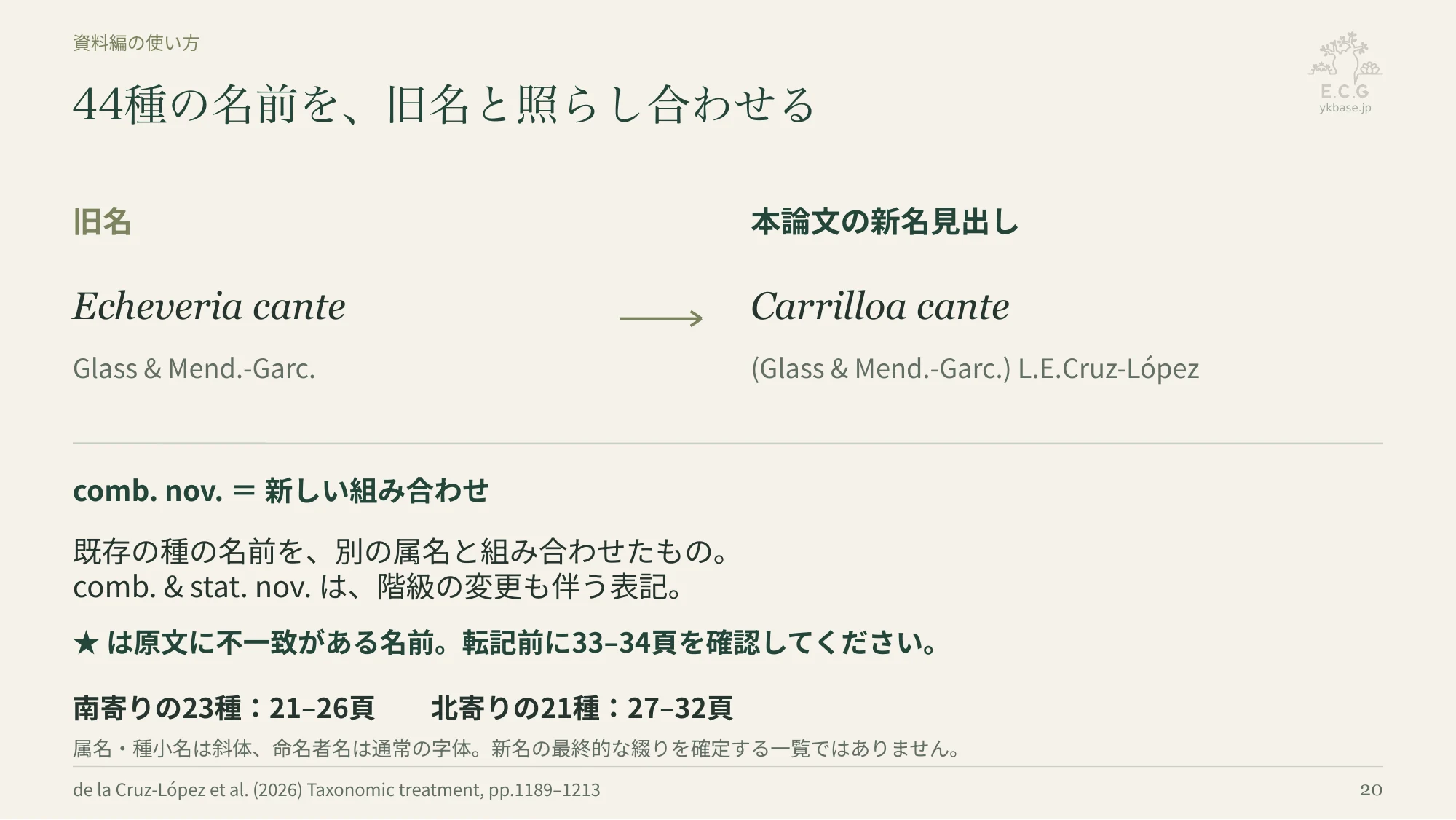
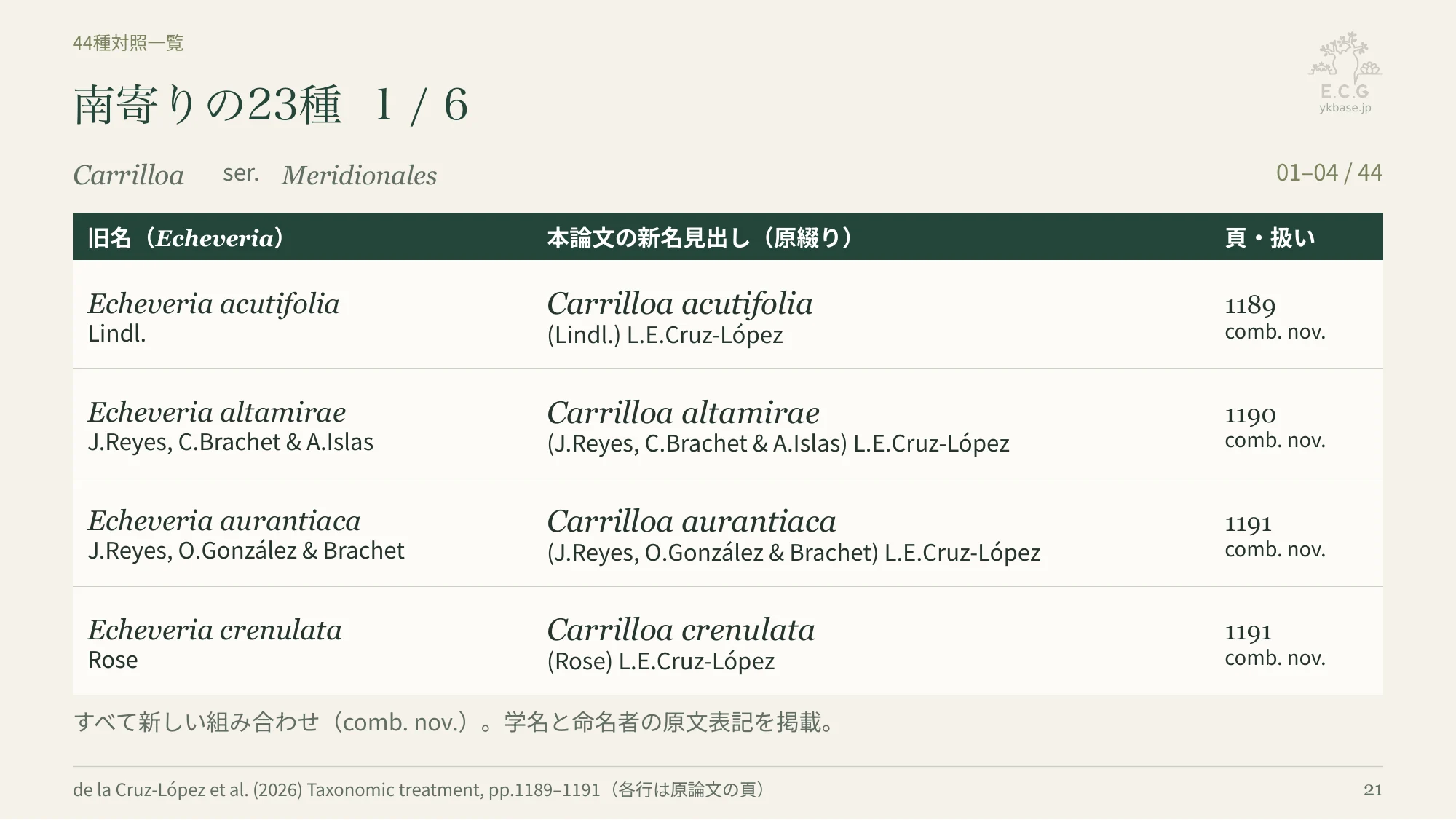
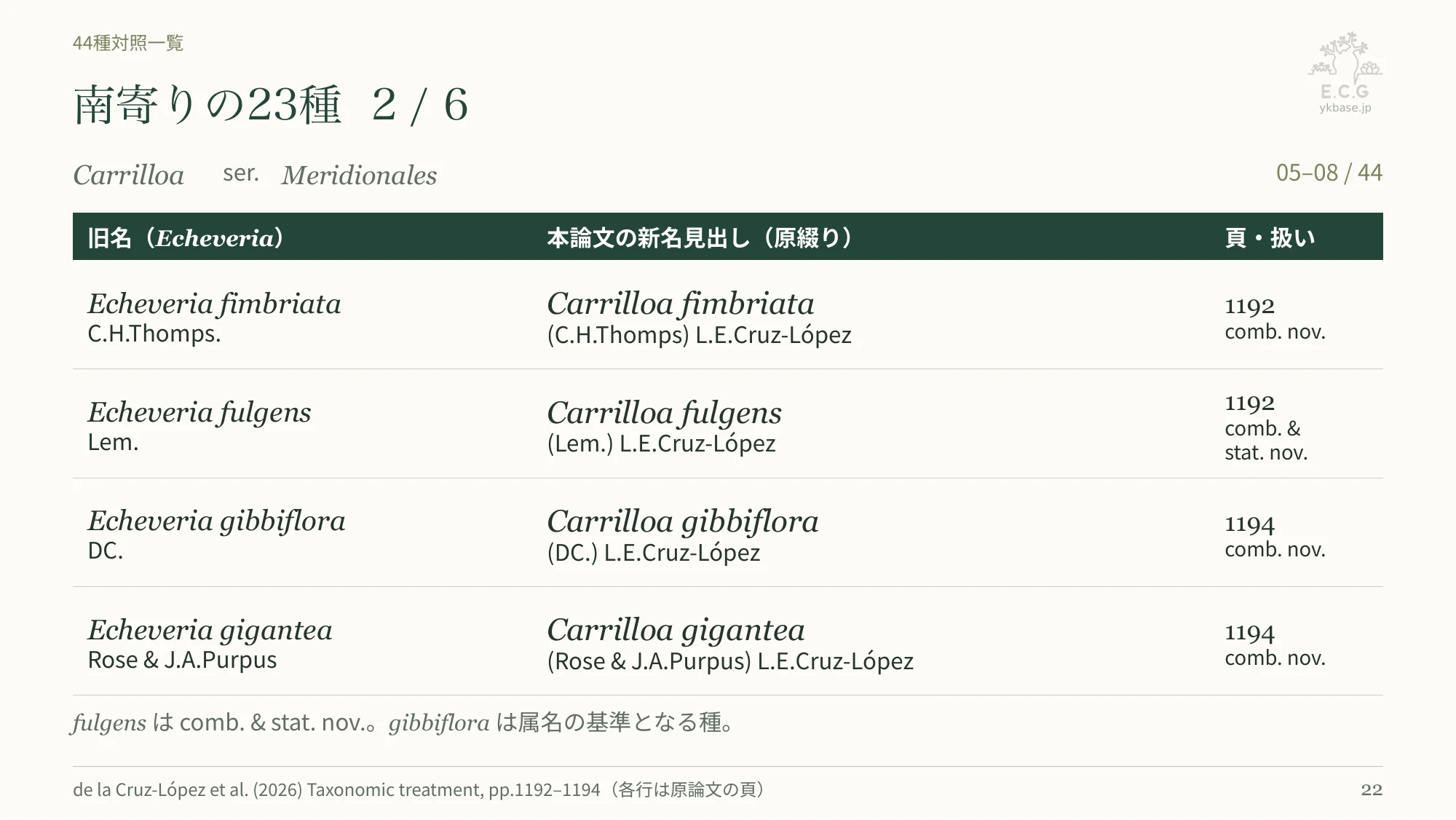
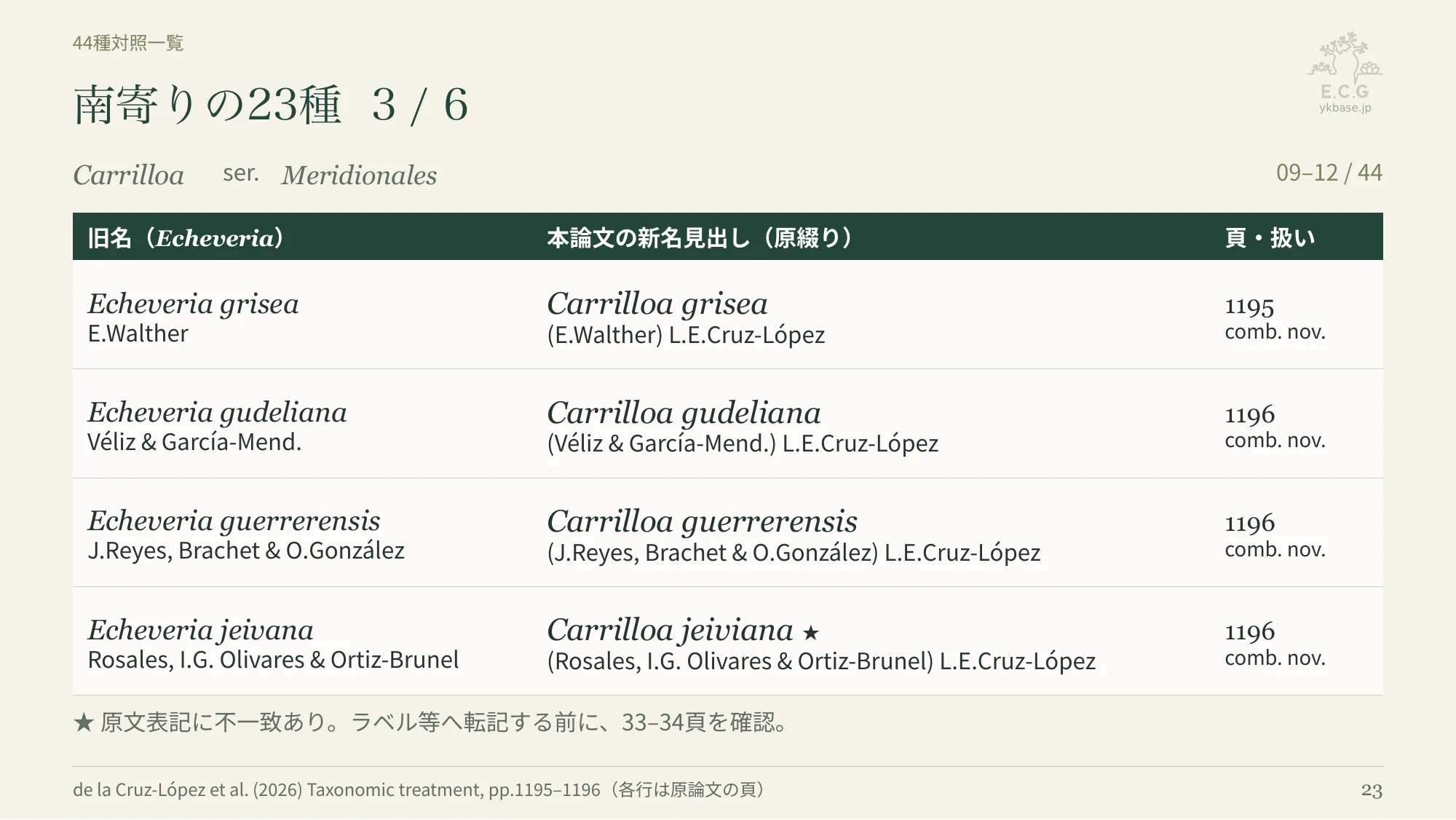
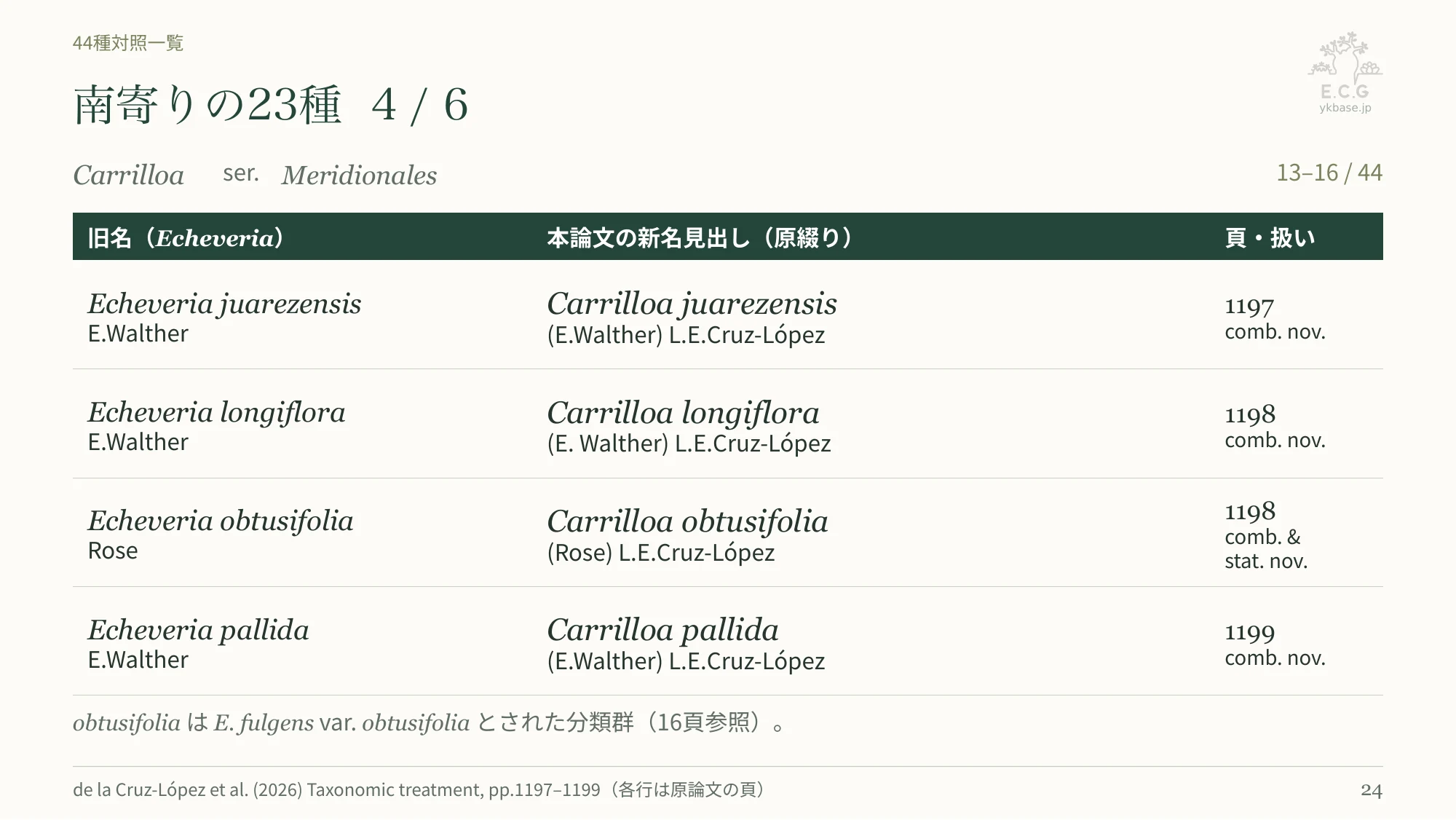
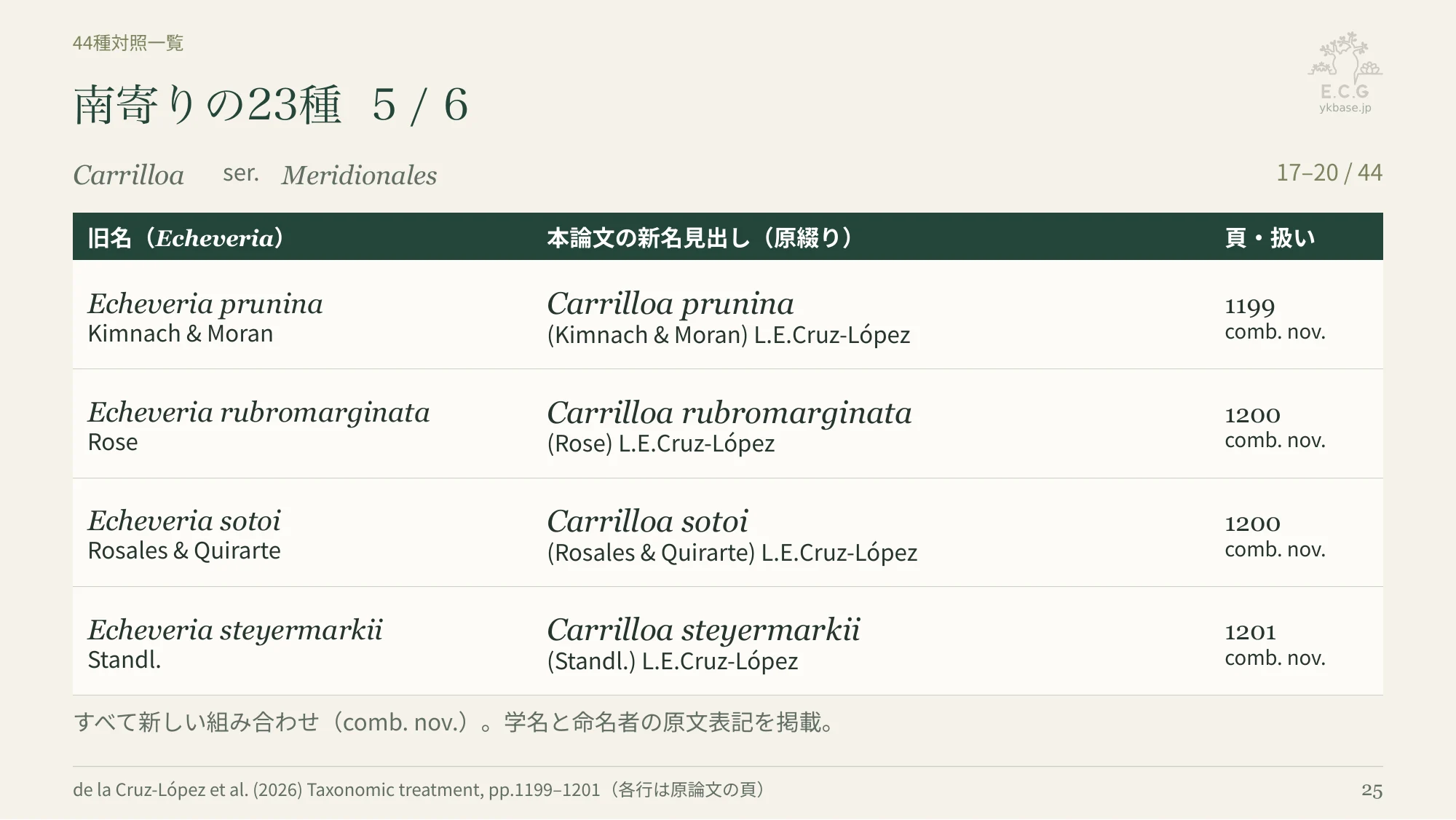
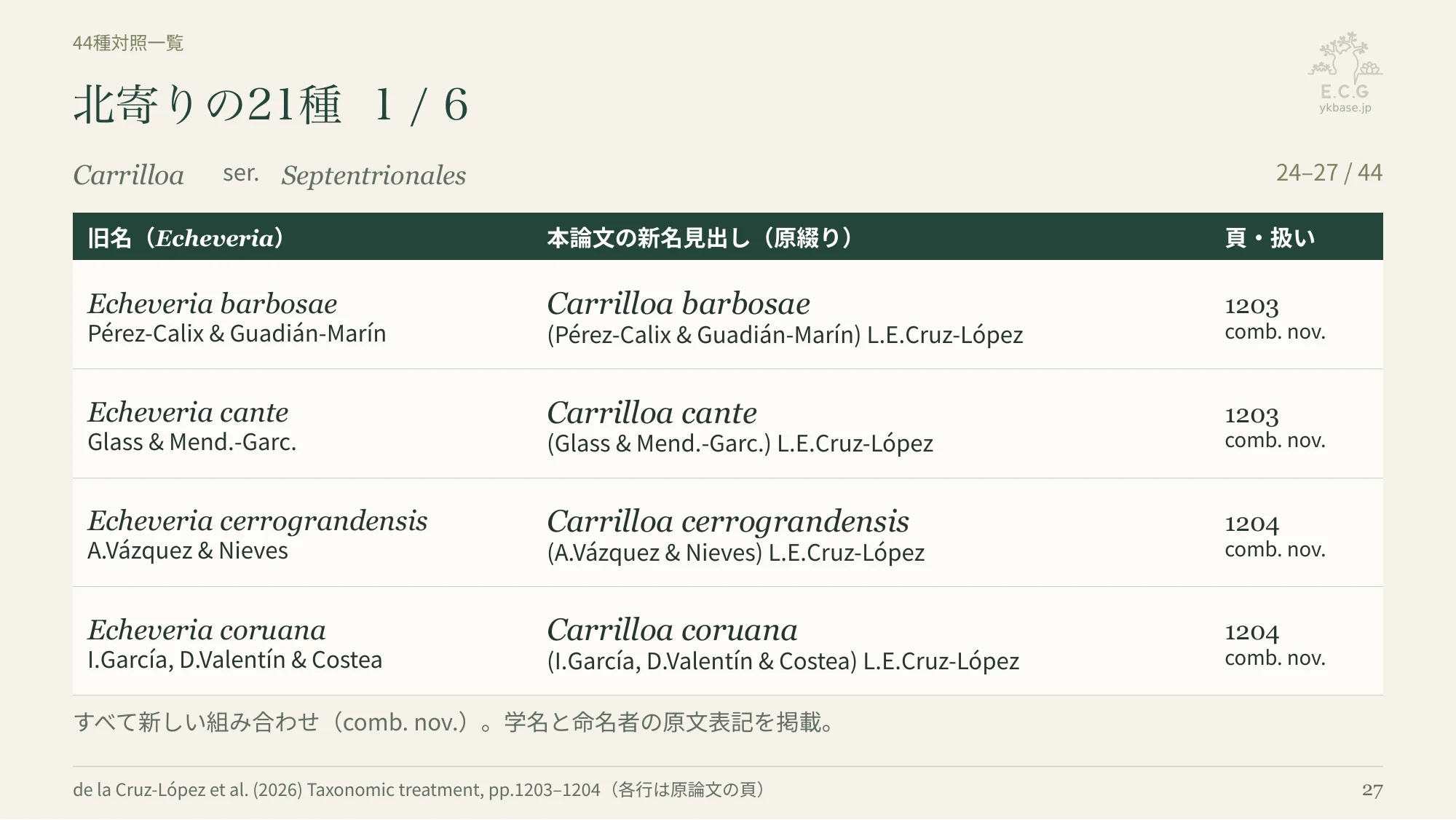
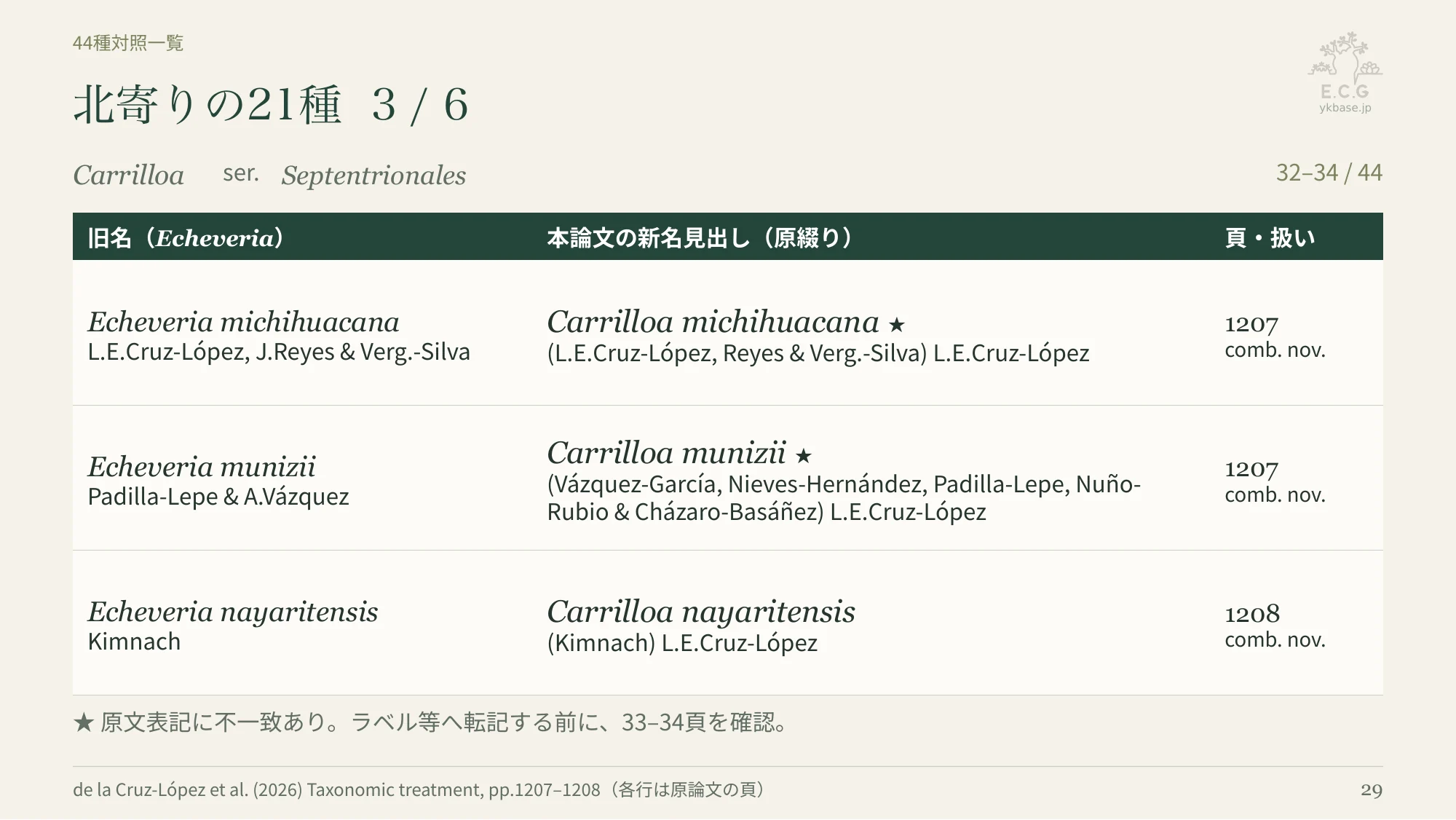
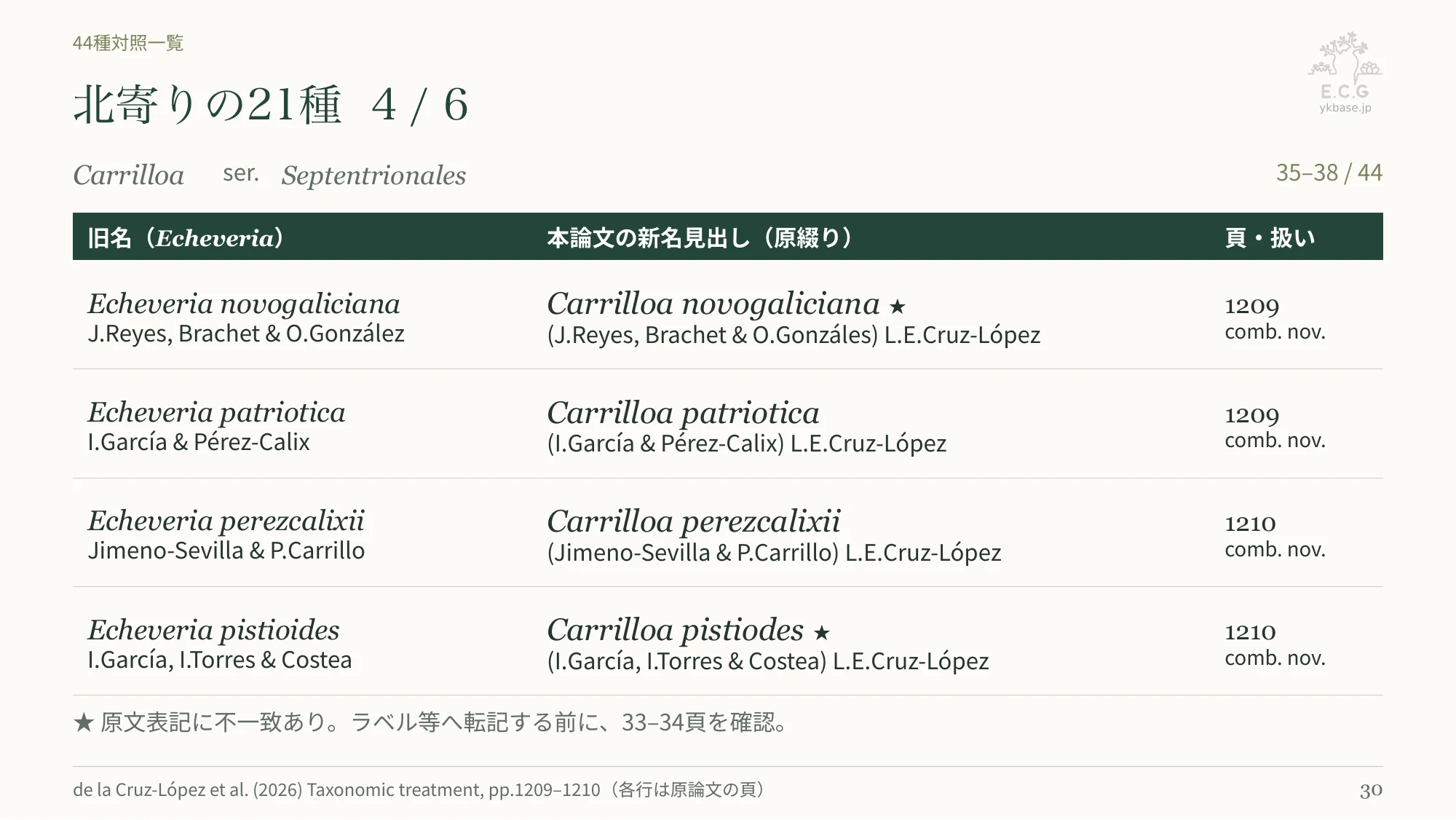
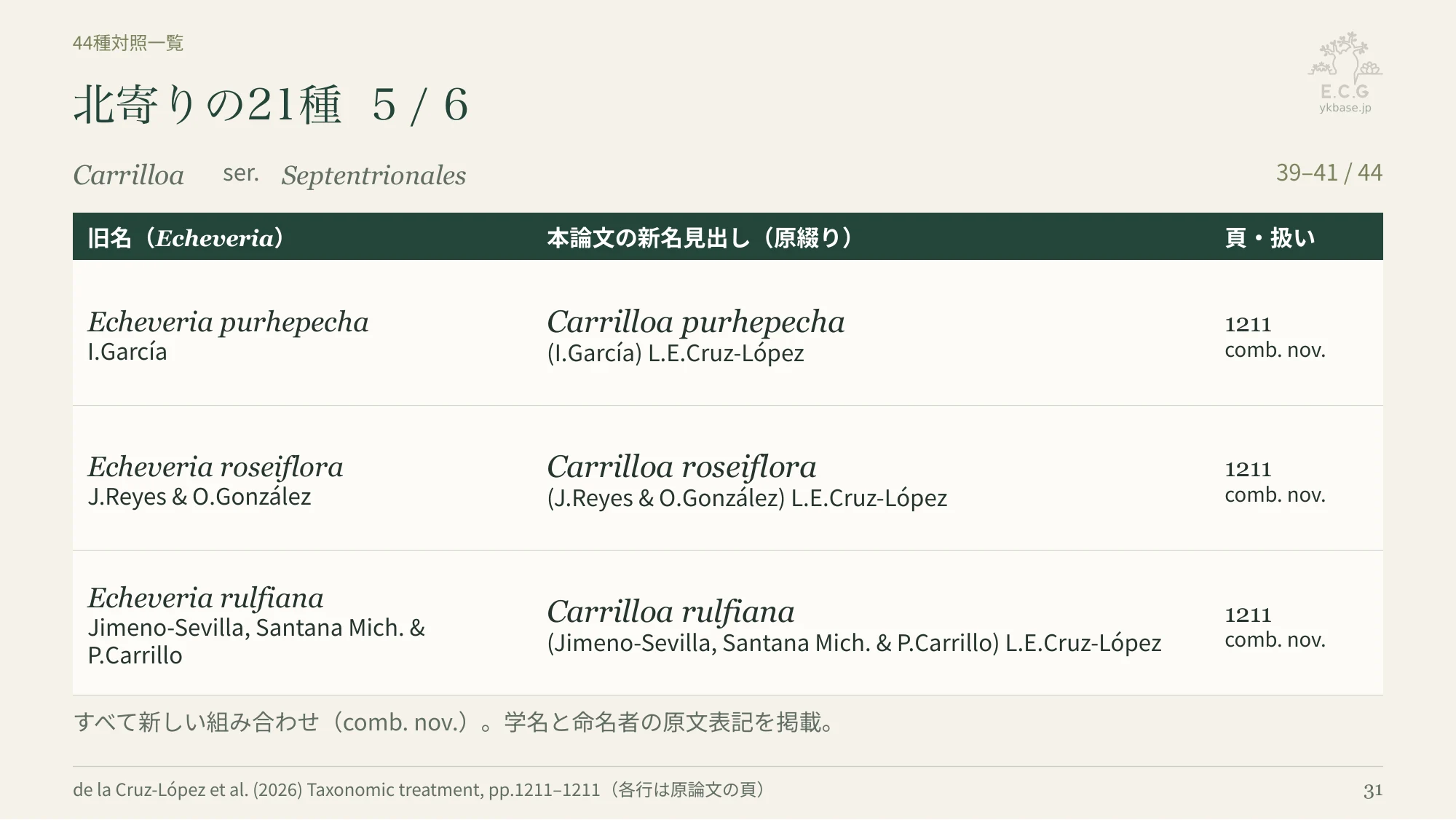
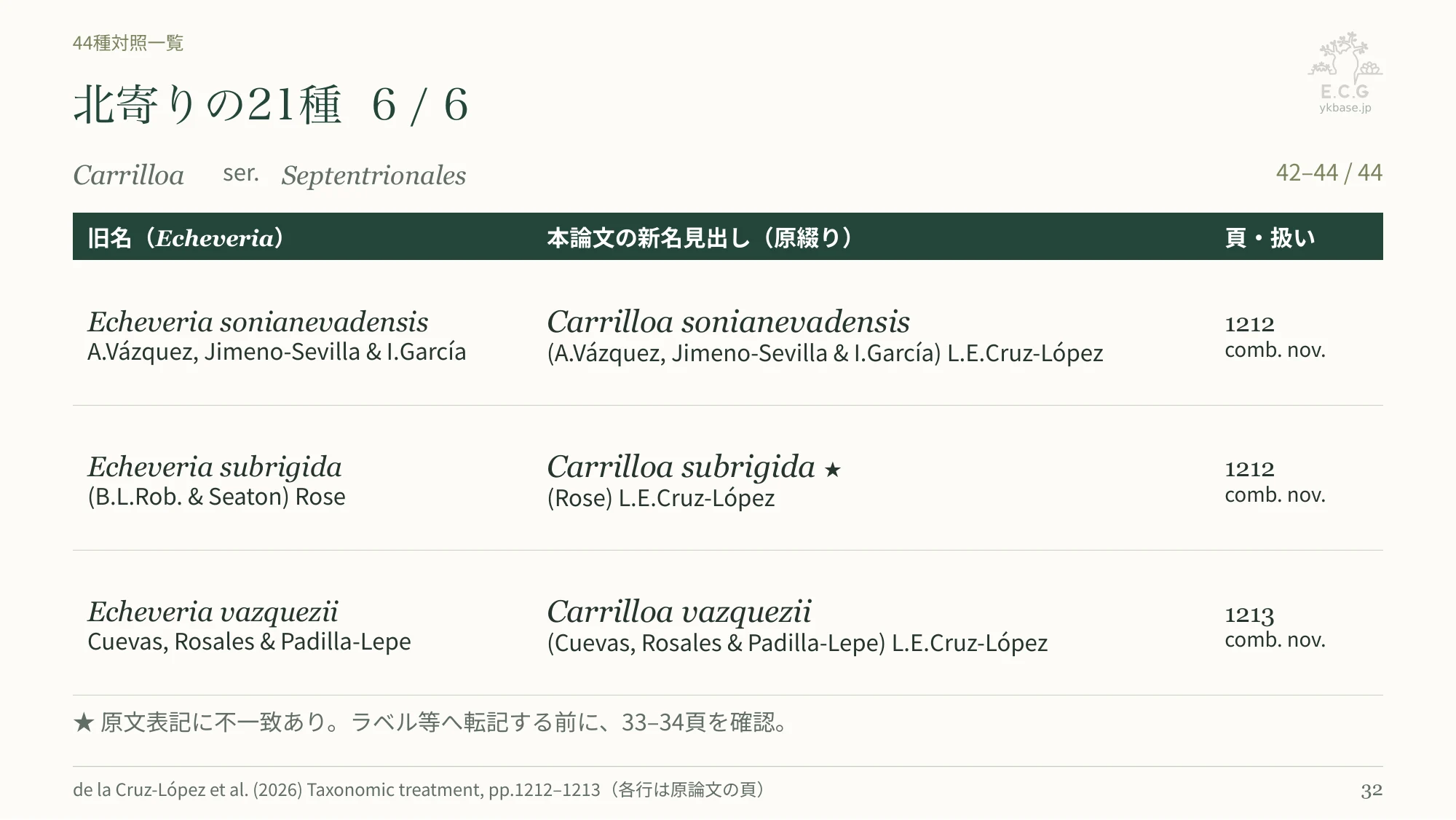
「属」は、近い関係の種をまとめる単位です。学名の前半が属名、後半が種小名。カンテを例にすると、この論文では次のように変わります。A genus groups related species. The first part of a species name is its genus; the second is its specific epithet. For cante, the paper proposes this change.
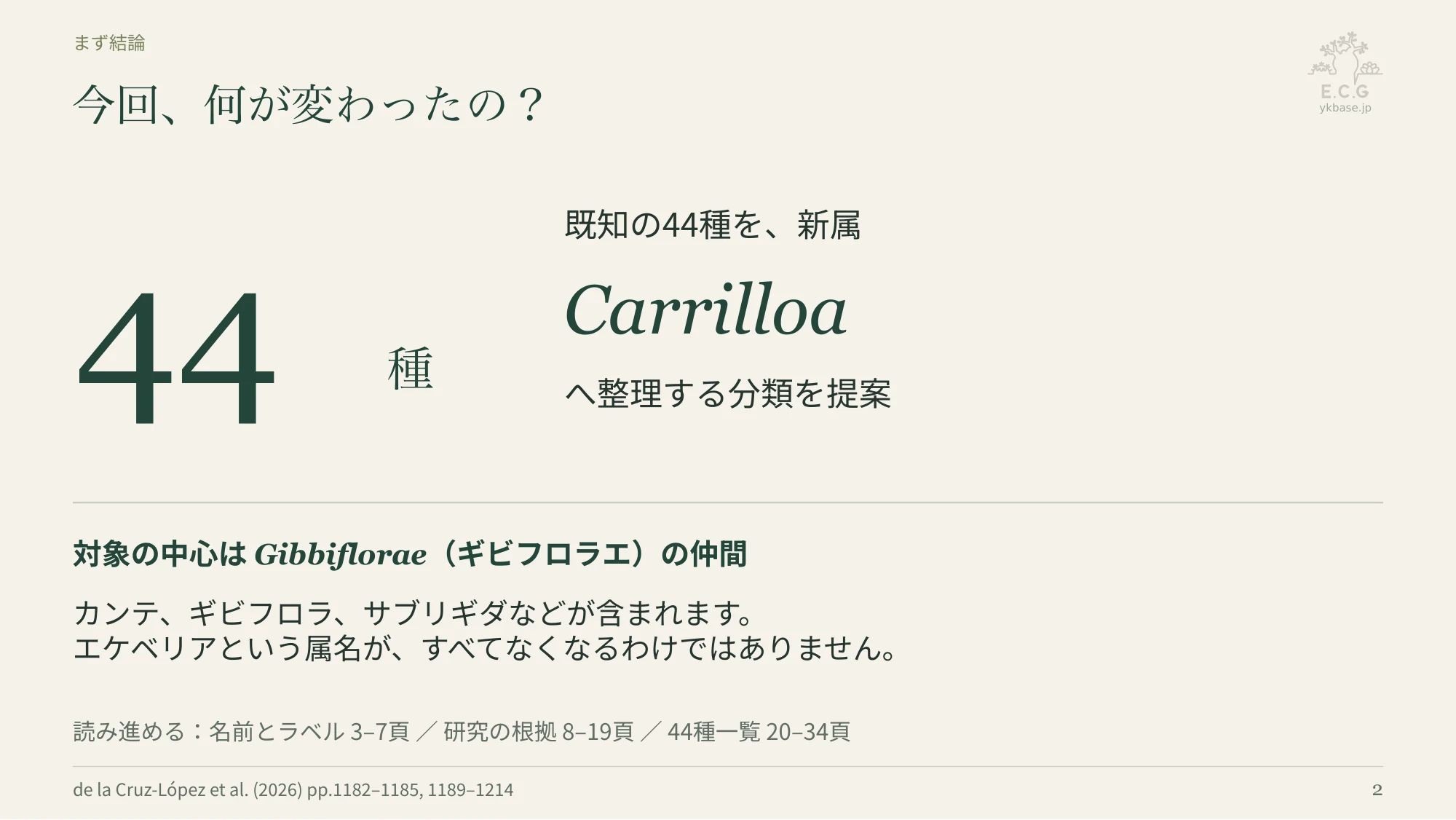
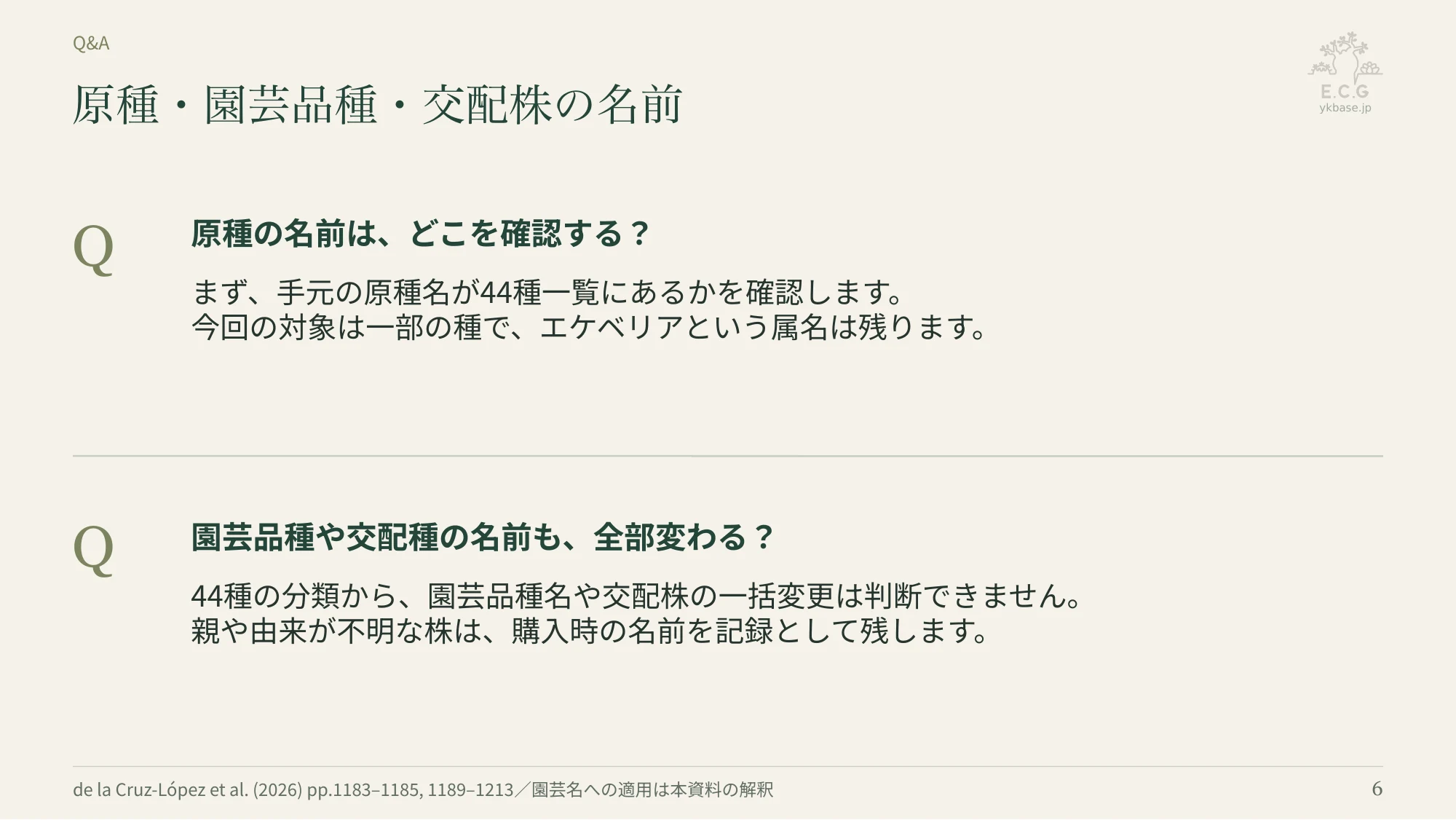
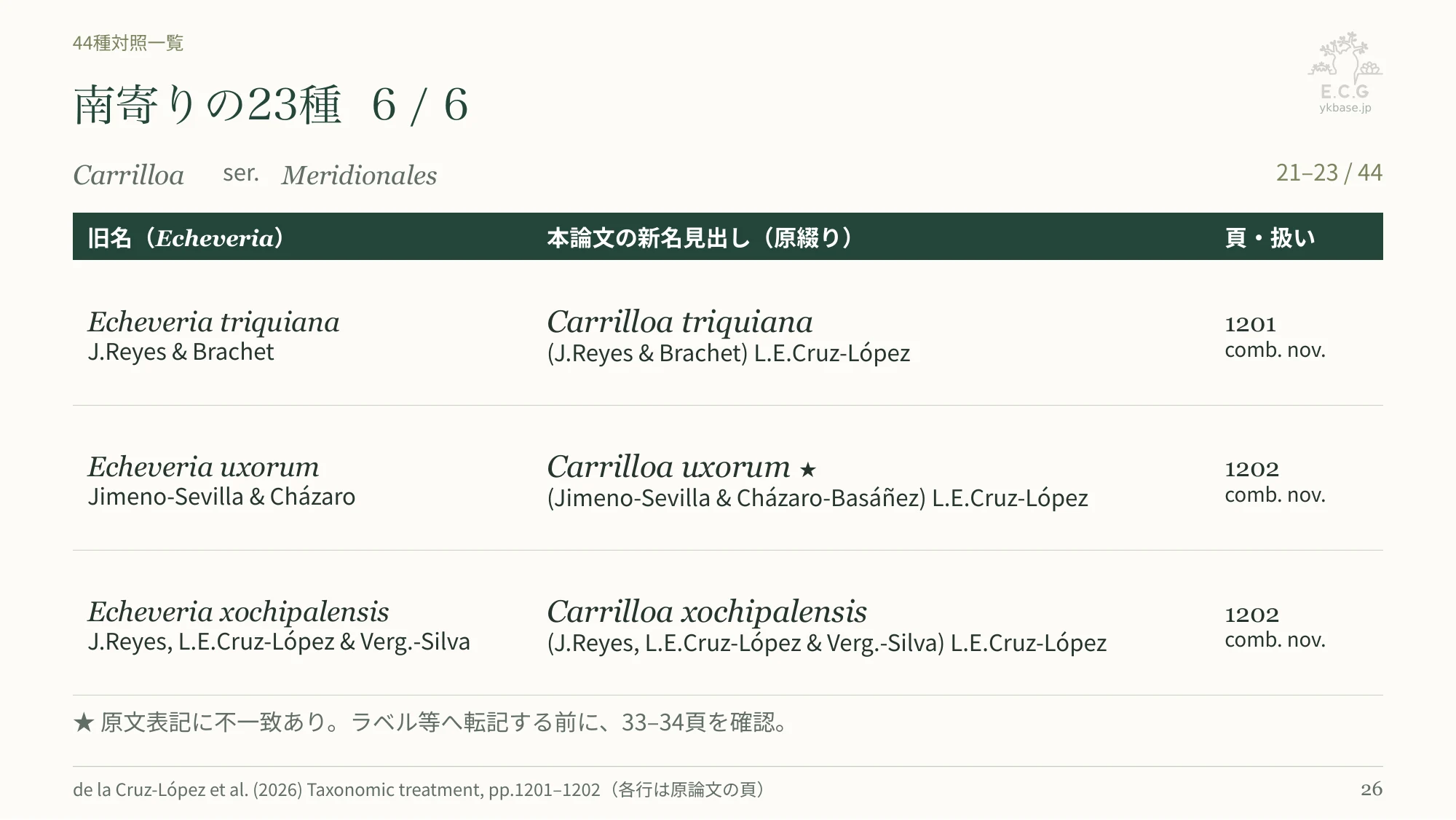
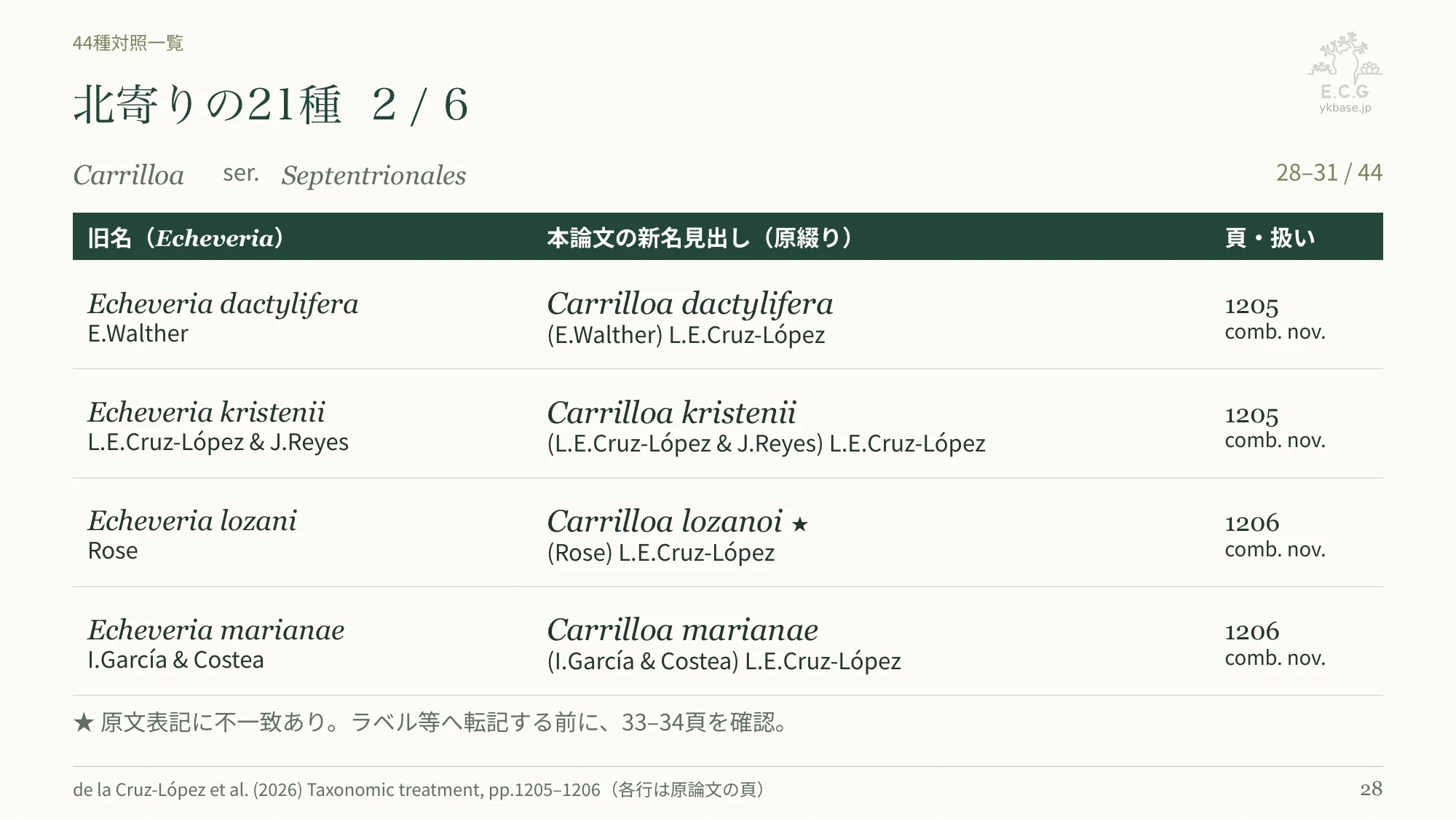
すでに知られている植物を、新しい仲間分けで整理したという話です。44種の新種が見つかった、という意味ではありません。These are plants already known to science, reorganized into a new group. The paper is not announcing the discovery of 44 new species.
原論文 pp.1182–1185, 1203–1204Paper, pp.1182–1185, 1203–1204 · 概要版 3ページOverview, page 3
研究の内容From the research
身近な植物も、今回の仲間。Familiar plants are included.
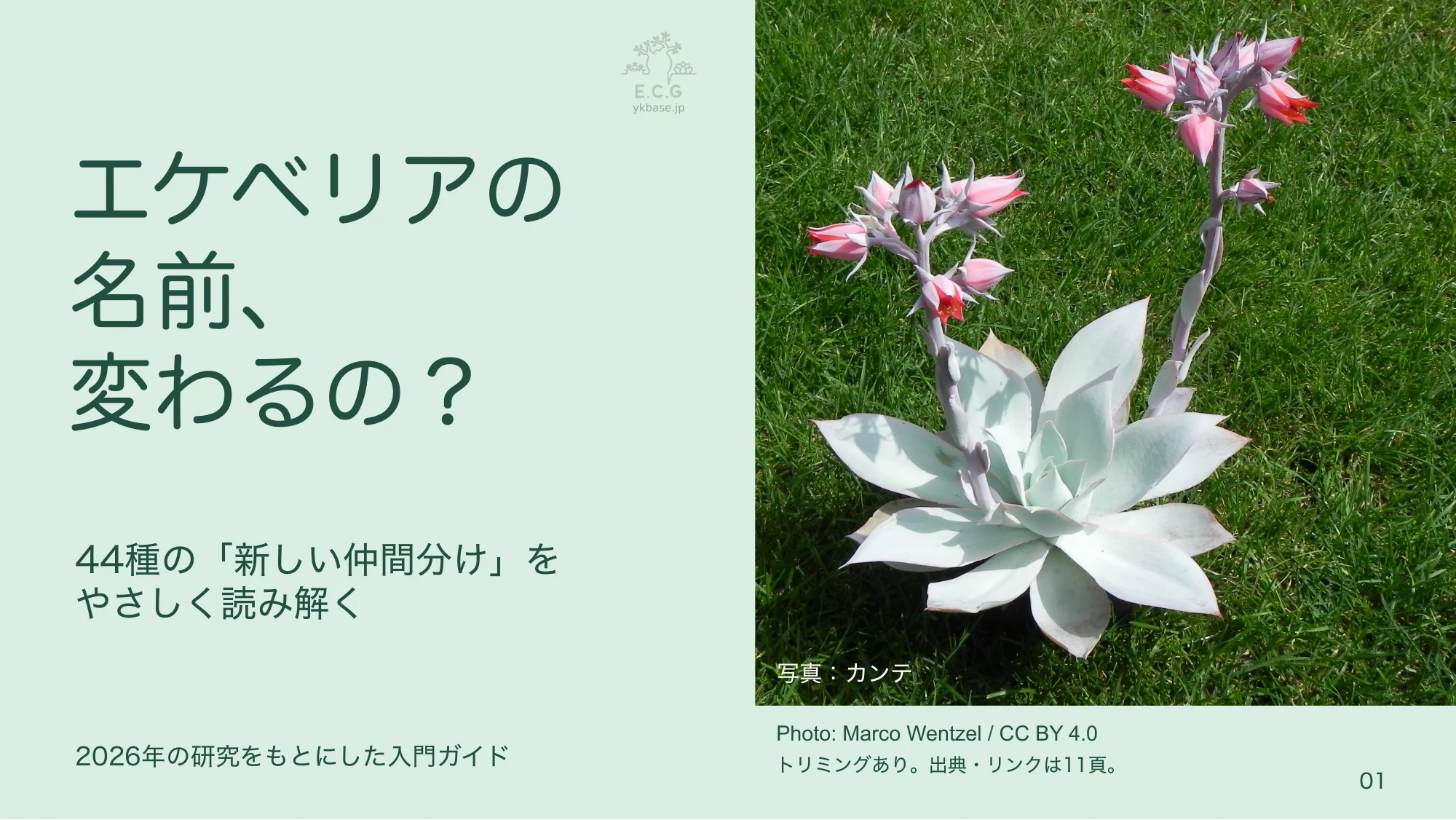
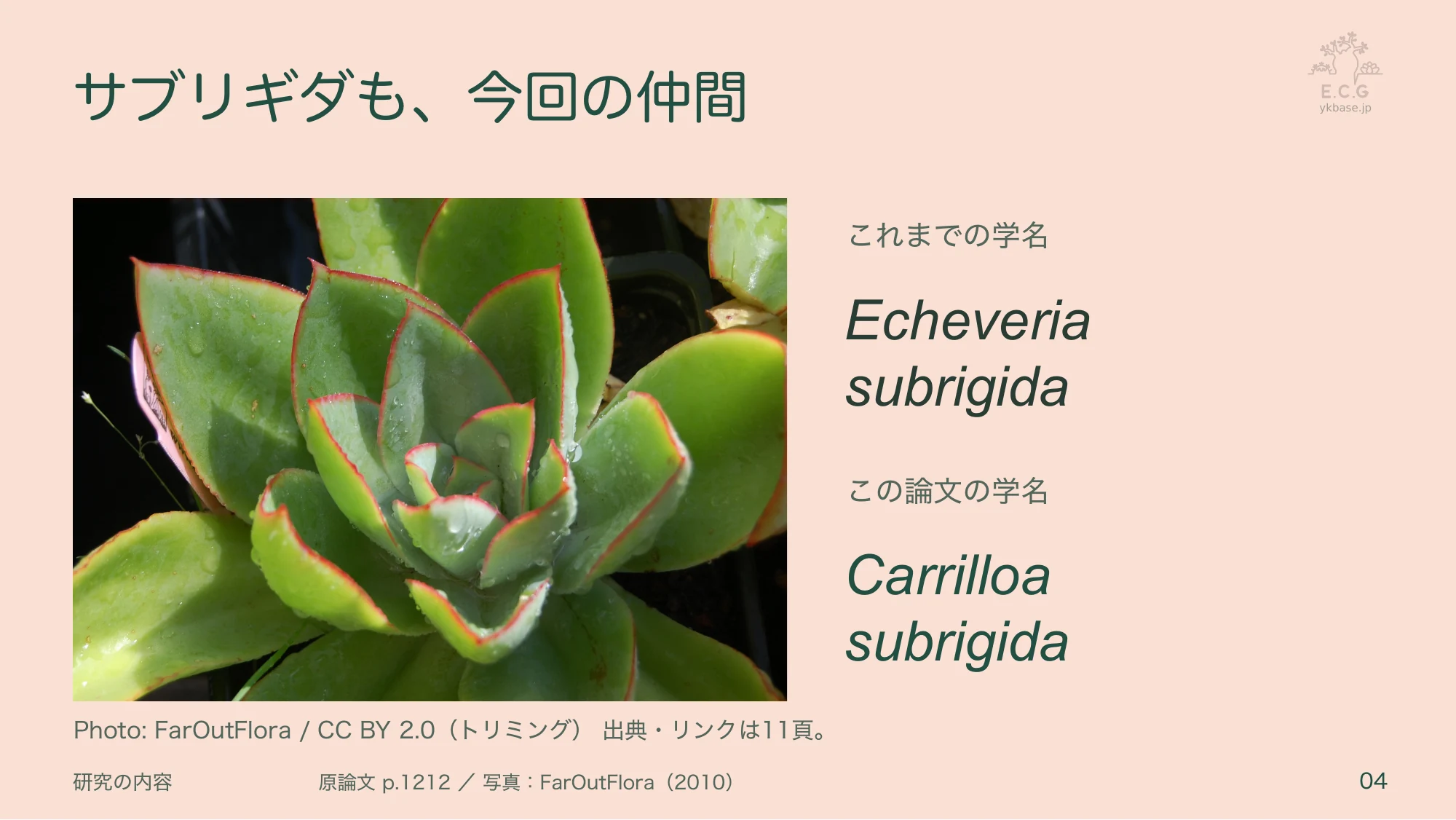
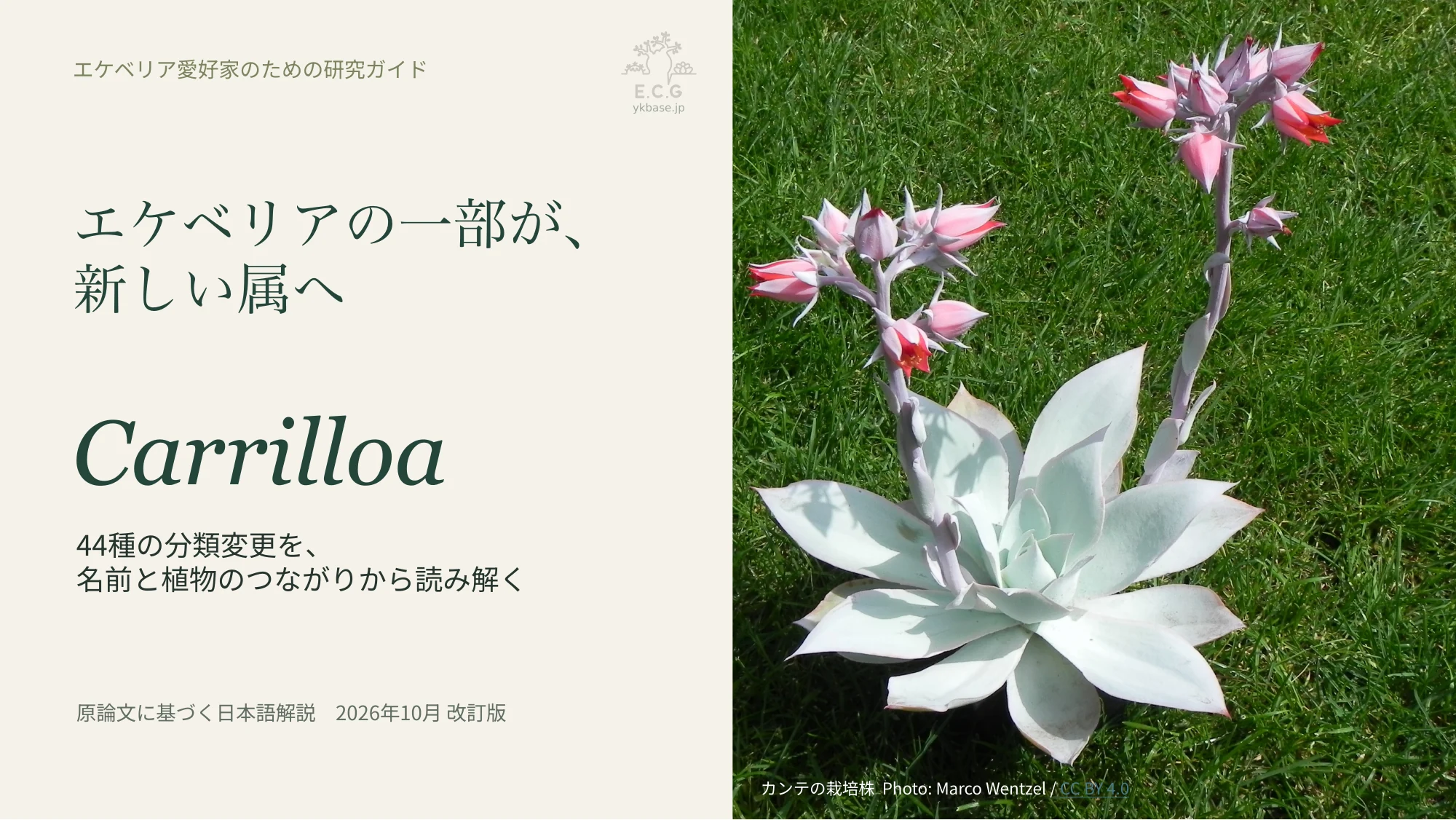
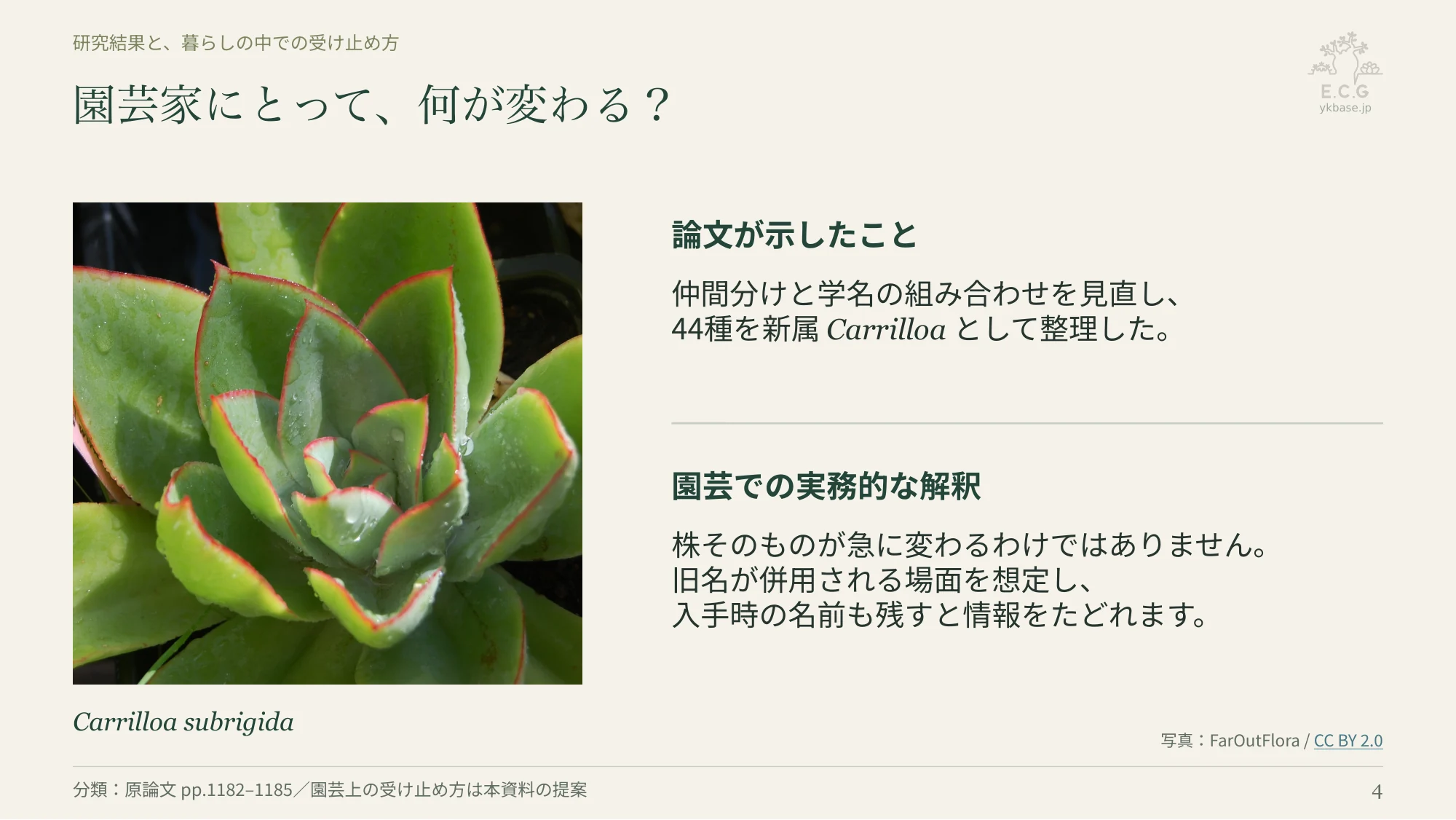
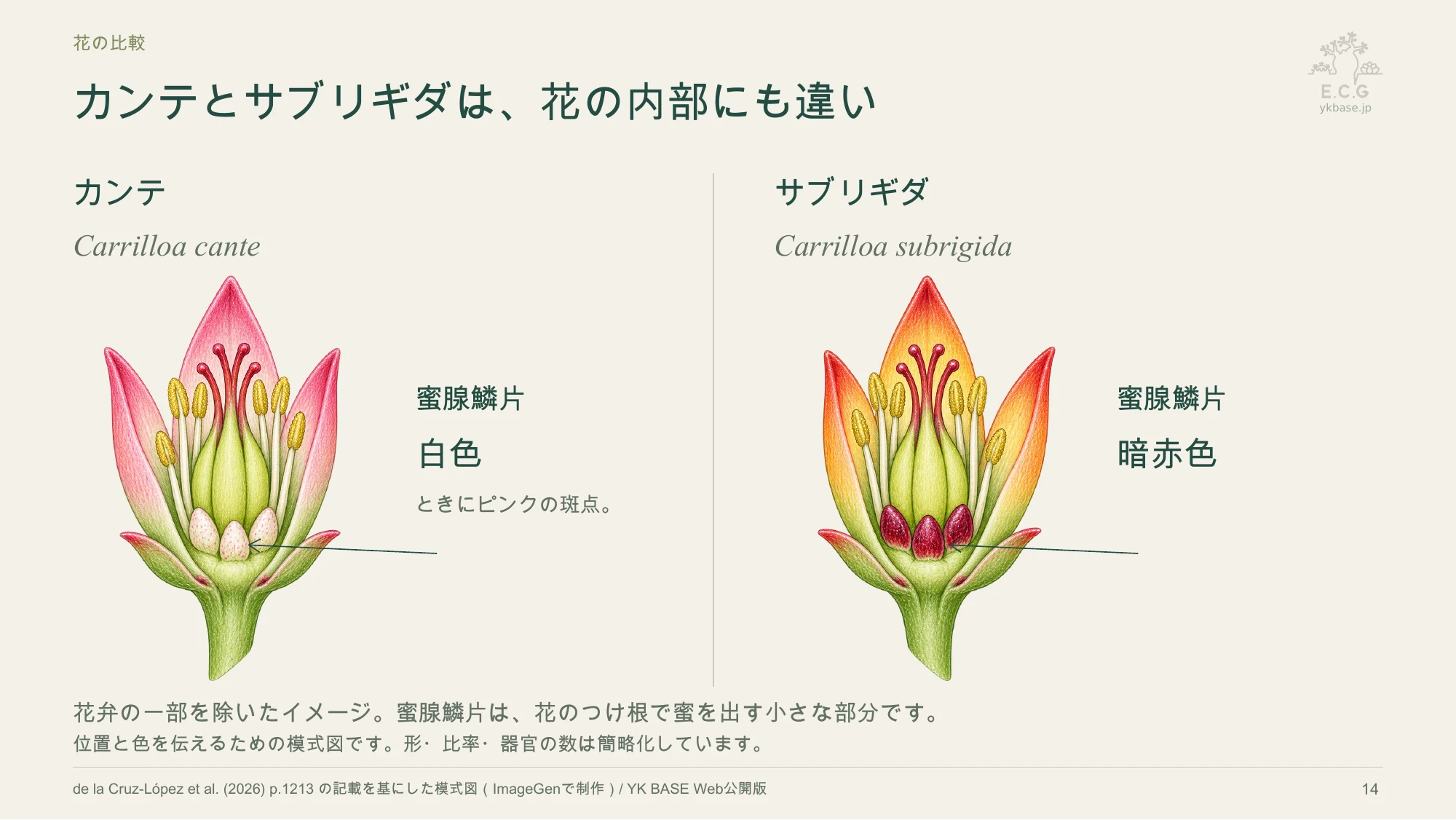
カンテ、サブリギダ、ギビフロラなども対象です。ただし、姿が似ているだけで同じ種や属と判断することはできません。Cante, subrigida and gibbiflora are among the species included. A similar appearance alone does not establish a plant’s species or genus.
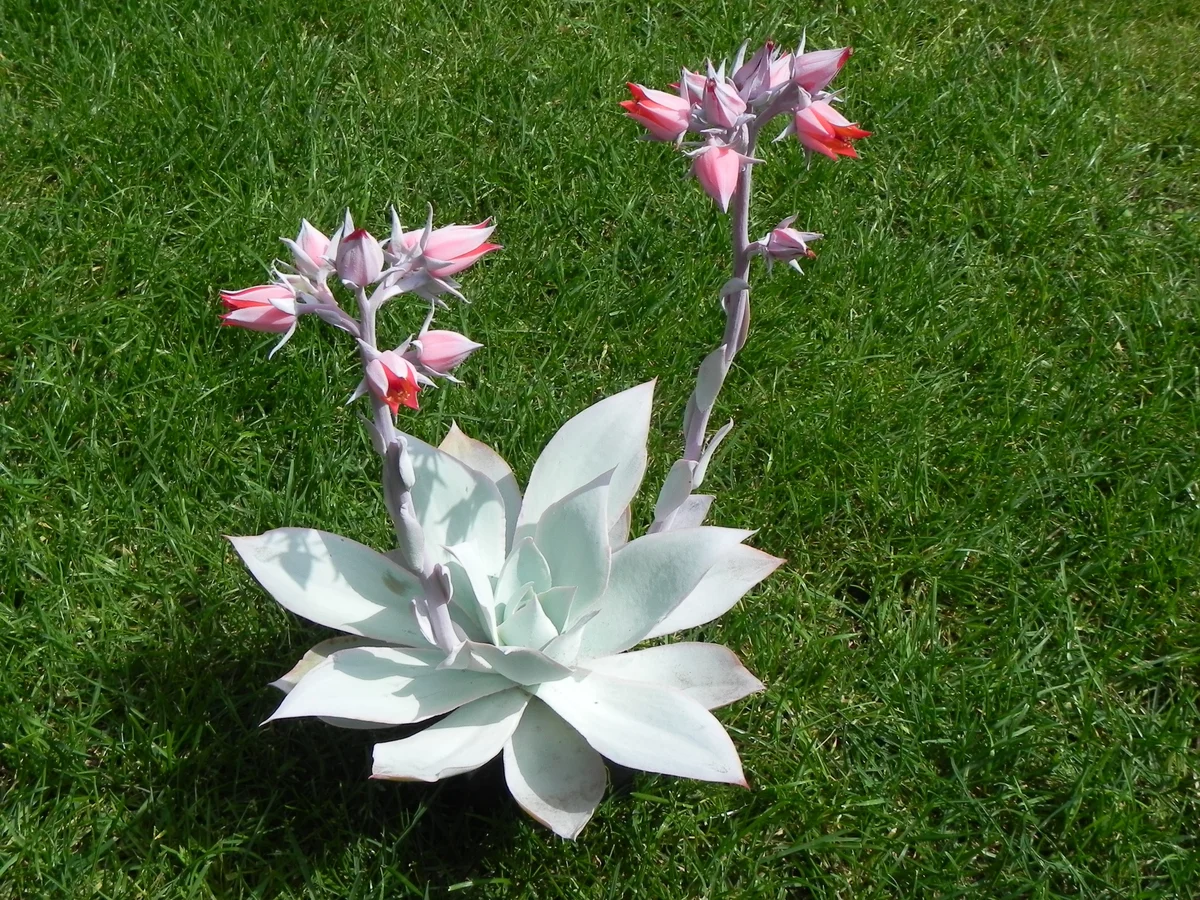
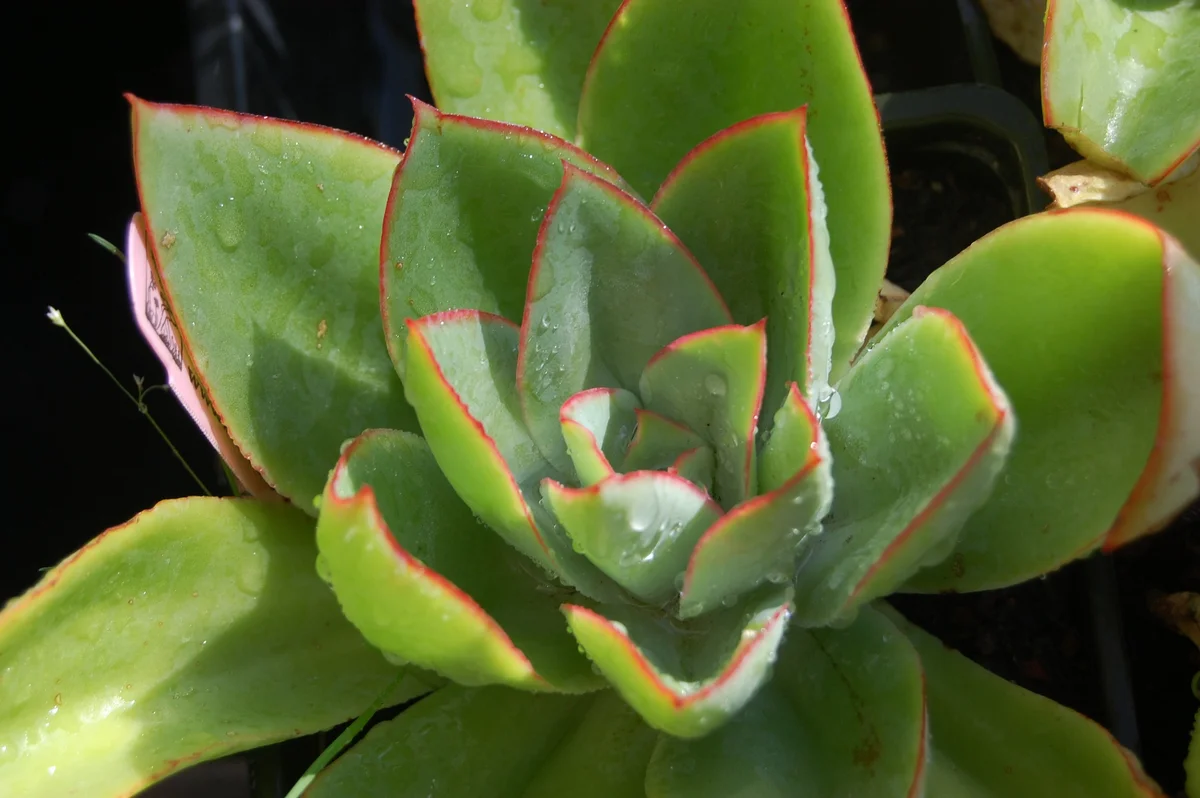
写真は表示用に縮小・トリミング。学名:原論文 pp.1194, 1203, 1212。Photos resized and cropped for display. Names: paper, pp.1194, 1203, 1212.
手元の植物の名前を調べるLook up a plant name研究の内容From the research
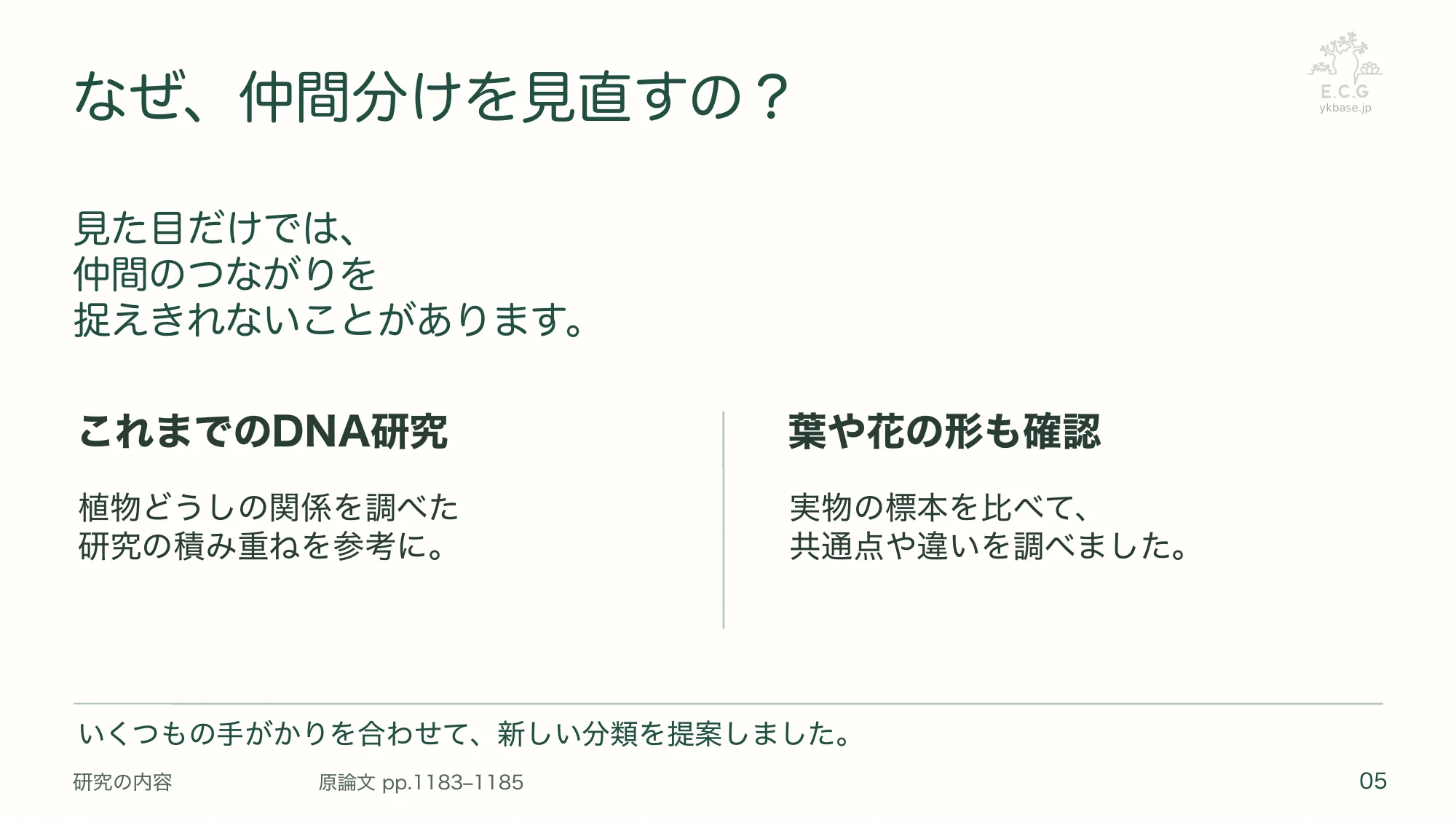
なぜ、分類を見直すの?Why revisit the classification?
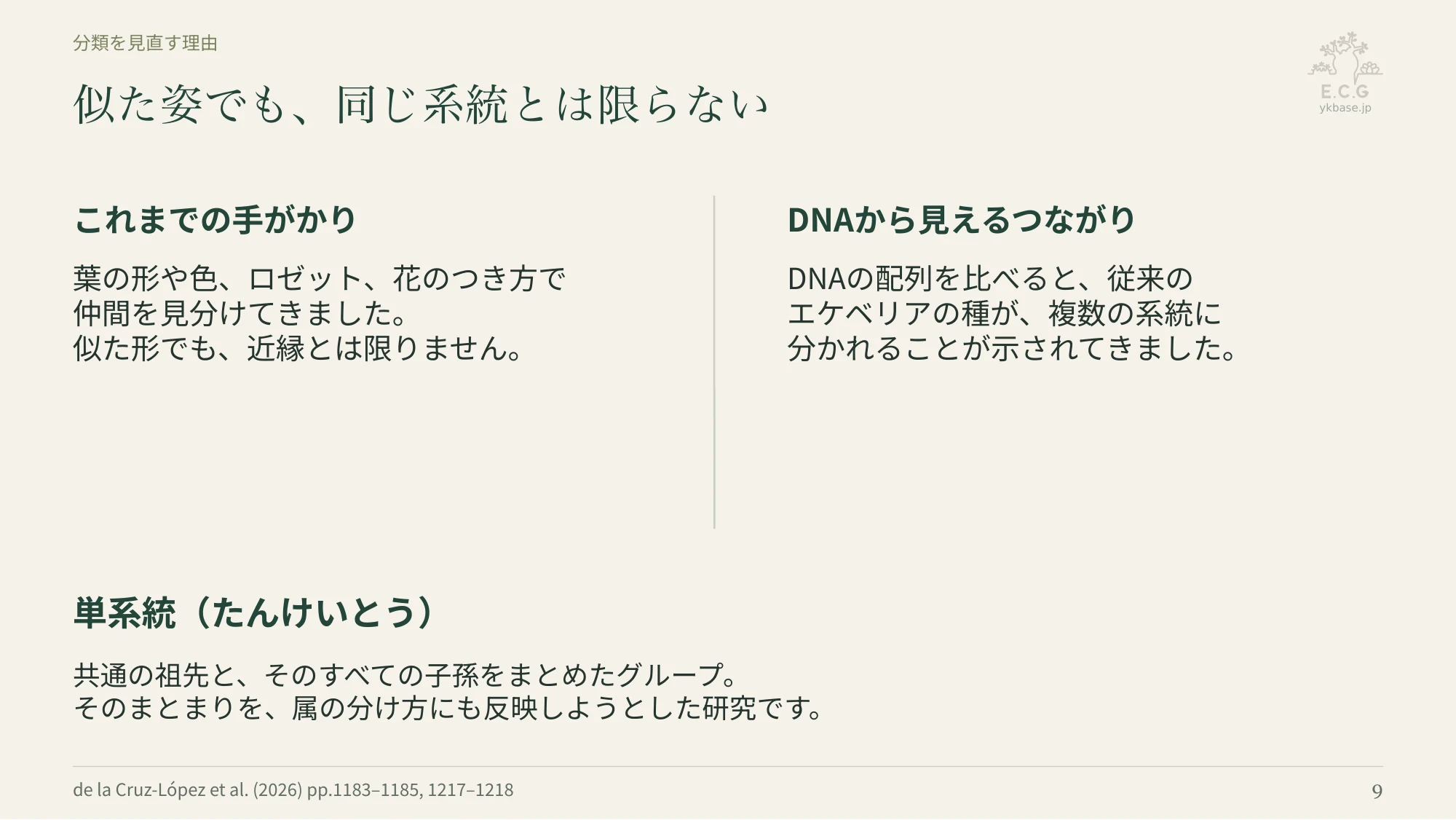
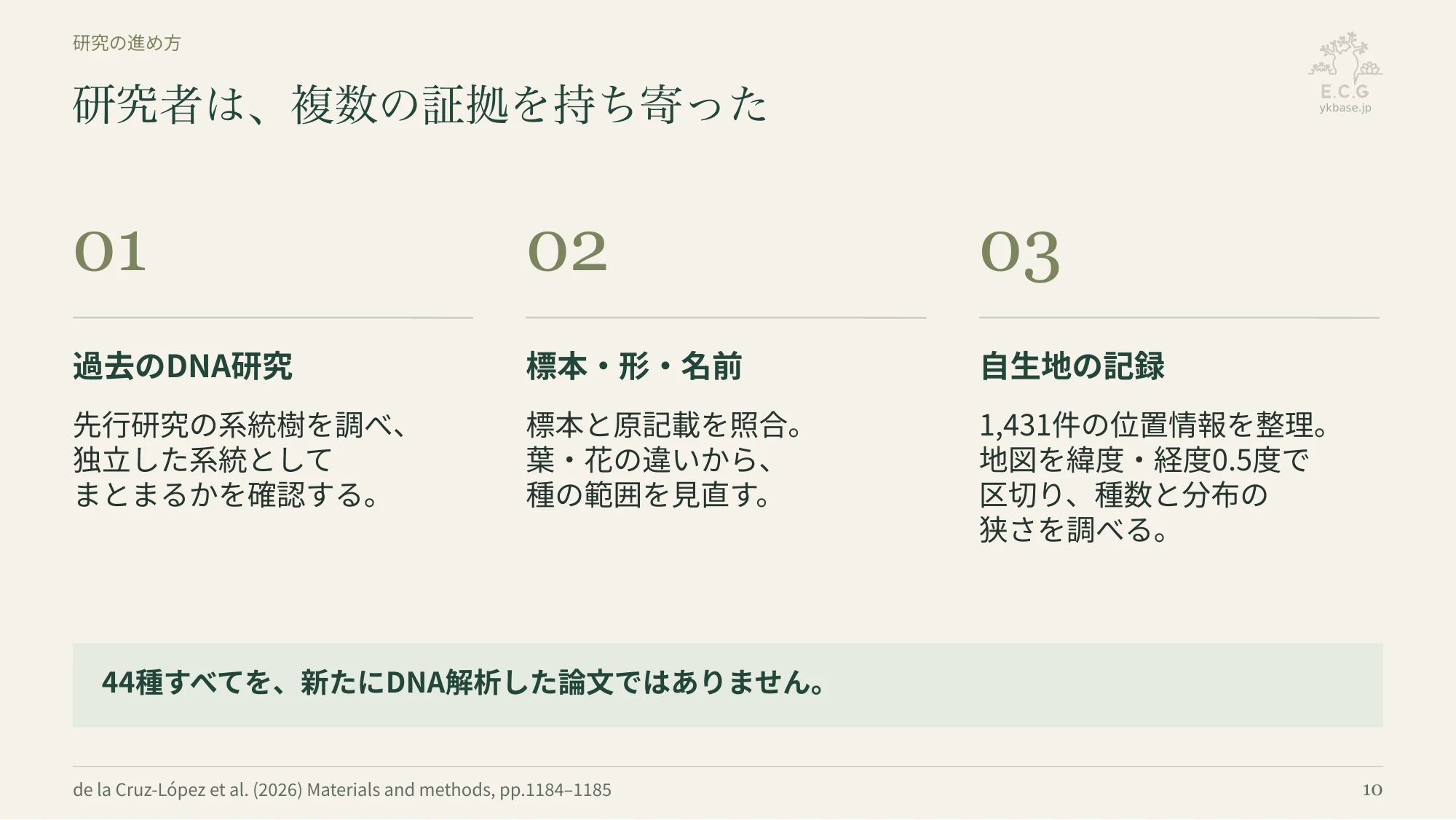
見た目が似ていても、進化の道筋が近いとは限りません。この論文は、先行するDNA研究に、標本・形態・分布の検討を合わせて、仲間の分け方を見直しました。Plants that look alike are not always close evolutionary relatives. This paper brings together earlier DNA studies with evidence from specimens, morphology and distribution to reassess the group.
これまでのDNA研究Earlier DNA studies
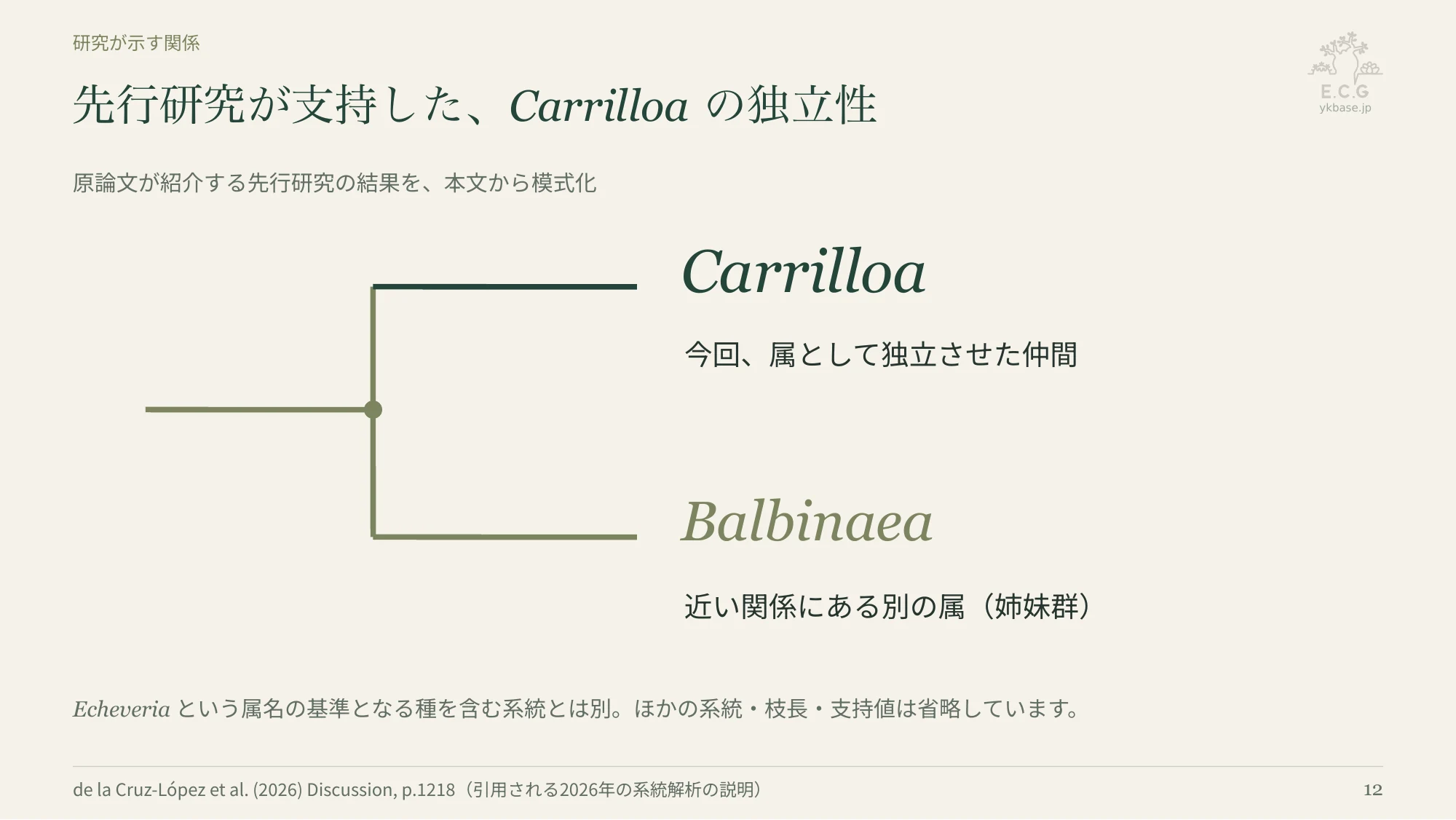
先行研究の系統樹から、独立した仲間としてまとまるかを確認。Published phylogenetic trees were reviewed for evidence that these plants form a distinct lineage.
葉や花、標本の比較Leaves, flowers and specimens
標本や最初の記載を照らし合わせ、種の範囲や特徴を検討。Specimens and original descriptions were compared to review species boundaries and traits.
自生地の記録Records from the wild
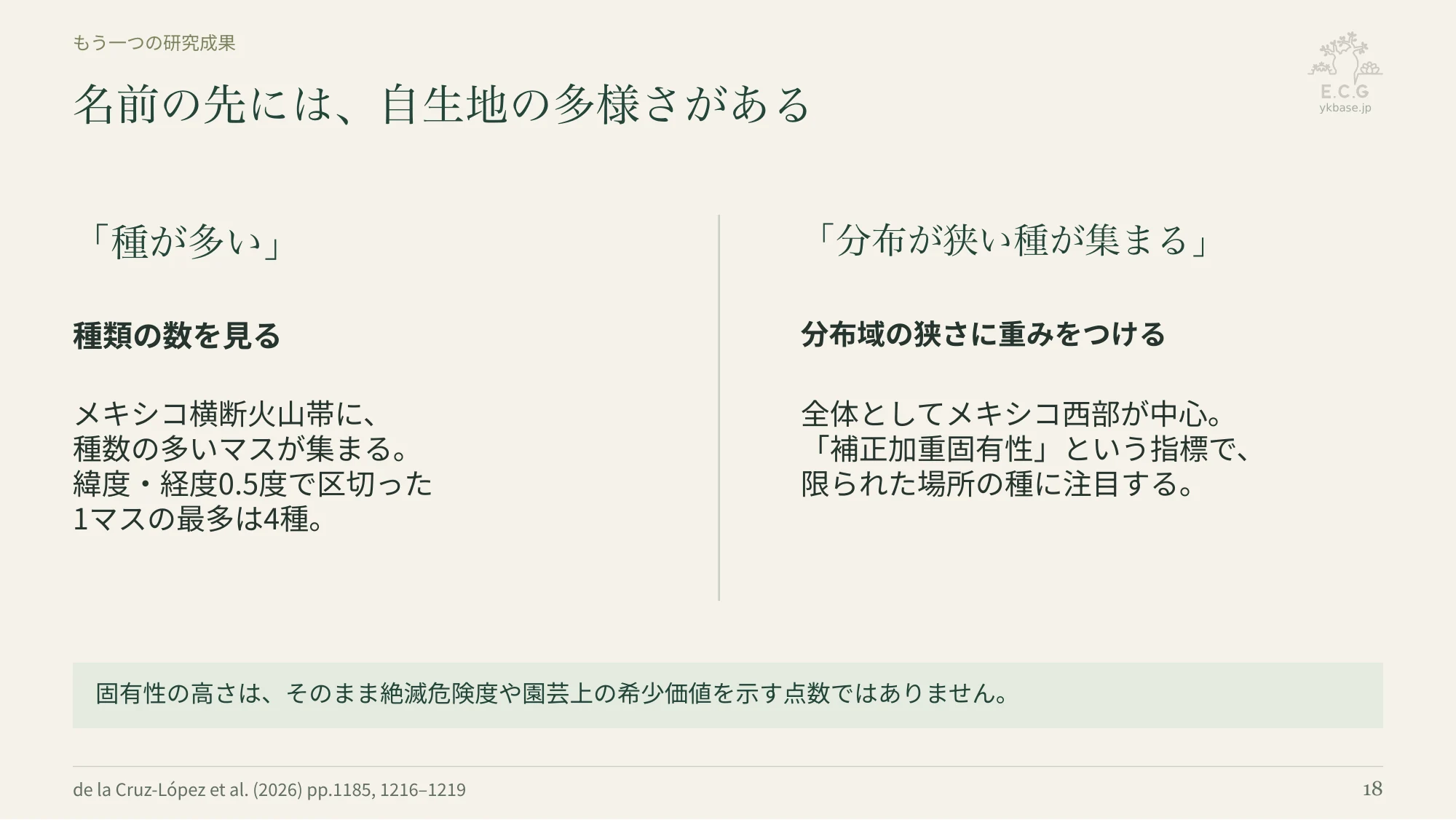
分布の記録を整理し、種の多さや、その地域に限られる種の分布を分析。Occurrence records were curated to study species richness and patterns of endemism.
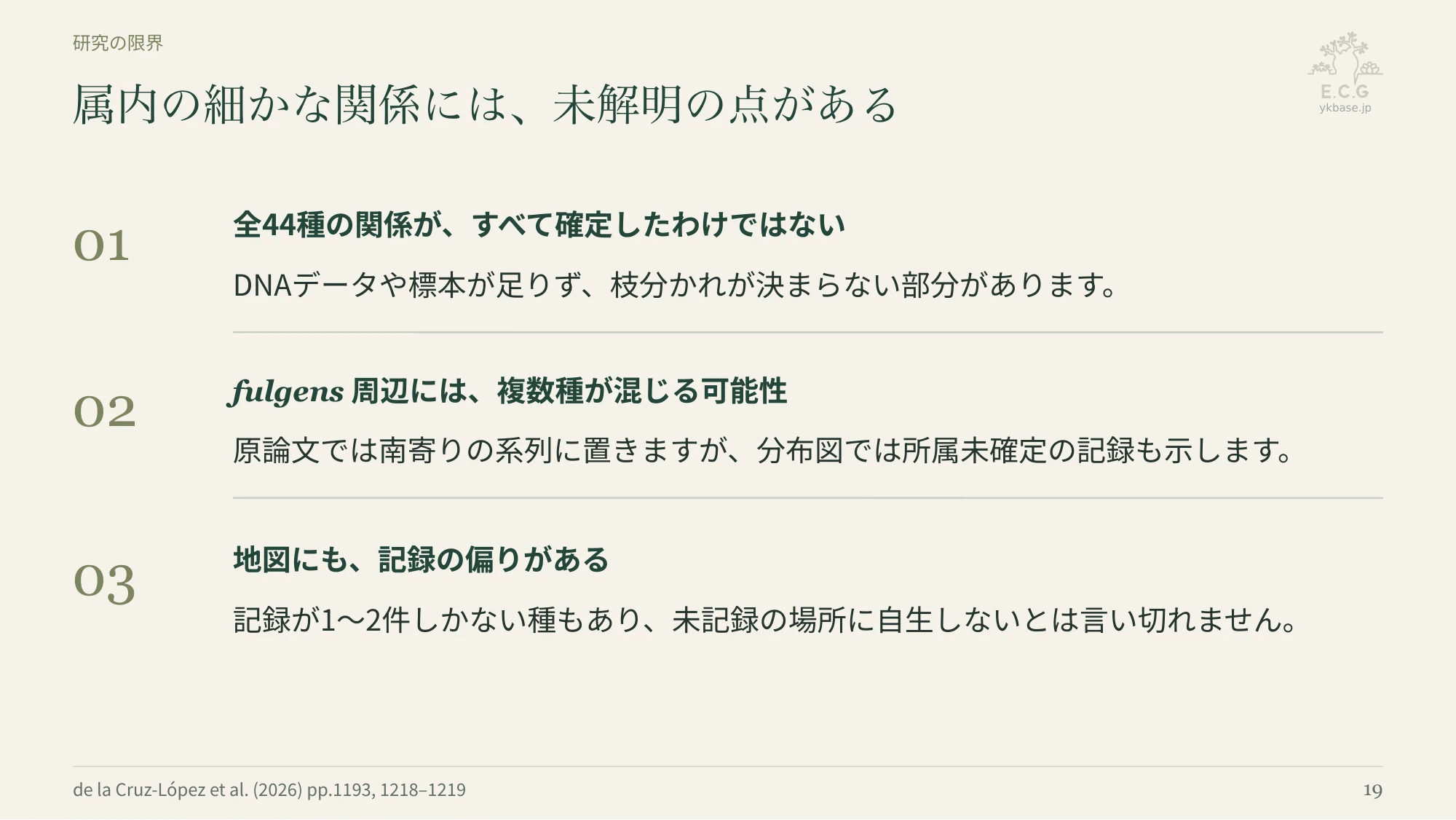
44種すべてを、この論文で新たにDNA解析したわけではありません。属内の細かな関係には、まだ未解明の点もあります。This paper did not newly sequence all 44 species. Some relationships within the genus remain unresolved.
原論文 pp.1183–1185, 1218–1219Paper, pp.1183–1185, 1218–1219 · 詳細版で研究の背景を読むExplore the evidence in the full guide
園芸での考え方Practical suggestions for growers
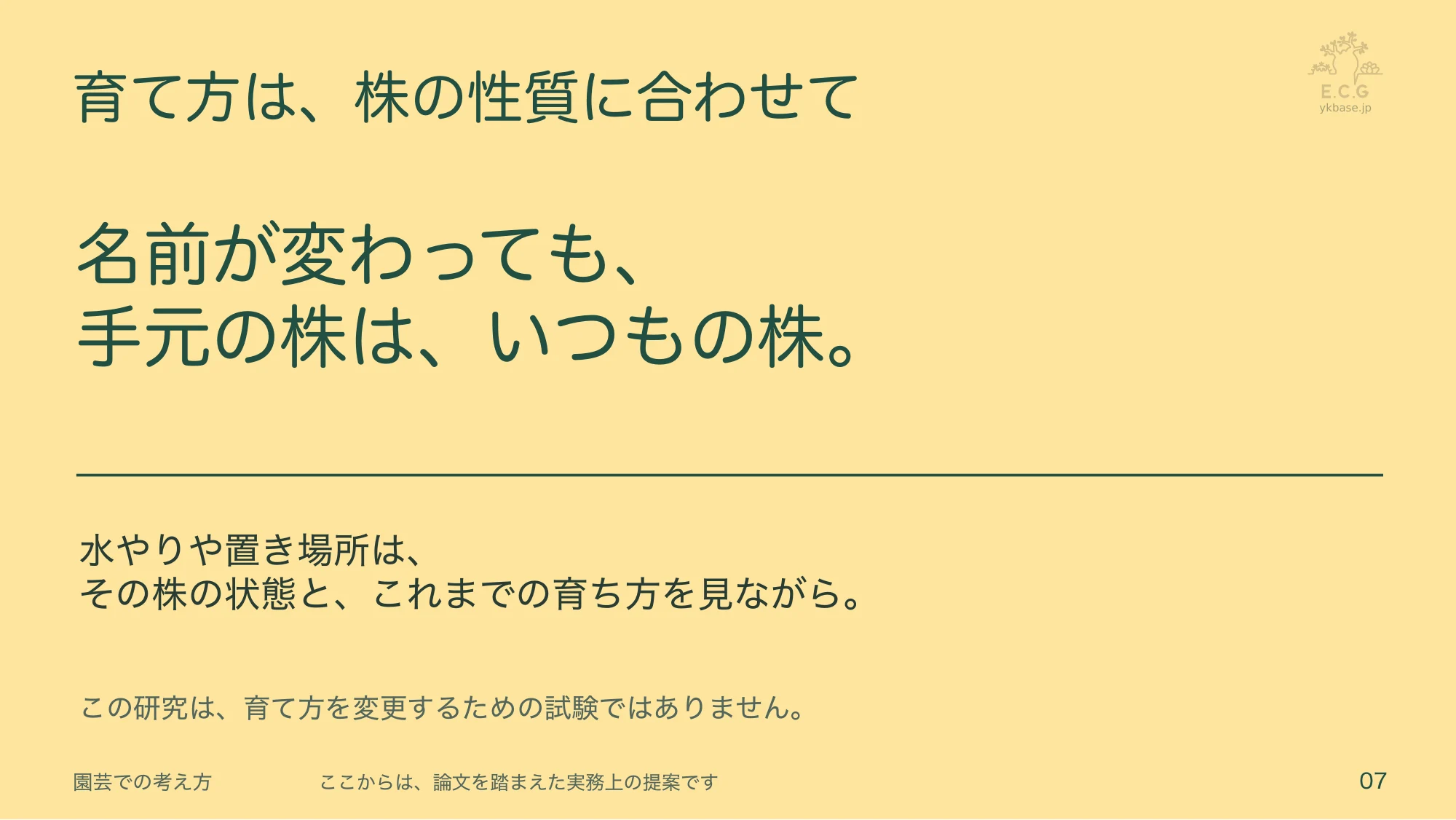
育て方は、株の性質に合わせて。Let the plant guide its care.
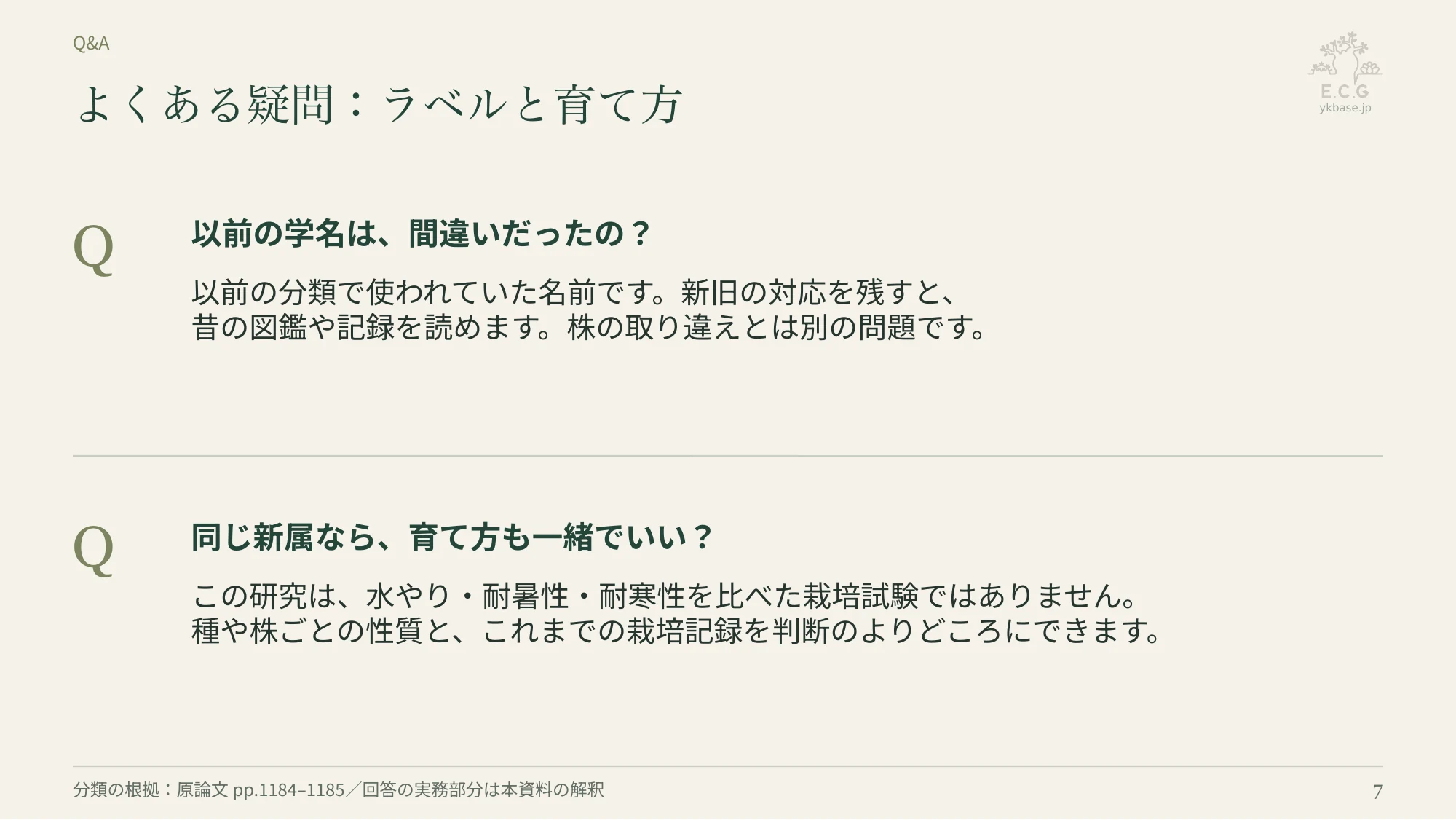
名前が変わっても、手元の株はいつもの株。水やりや置き場所は、その株の状態と、これまでの育ち方を見ながら考えましょう。A new name does not change the plant in your care. Let its condition and growing history guide decisions about watering and where to keep it.
この研究は、水やり・耐暑性・耐寒性を比べた栽培試験ではありません。ここからは、研究を踏まえた本ガイドの提案です。This research is not a cultivation trial comparing watering needs, heat tolerance or cold tolerance. The following advice is this guide’s practical interpretation.
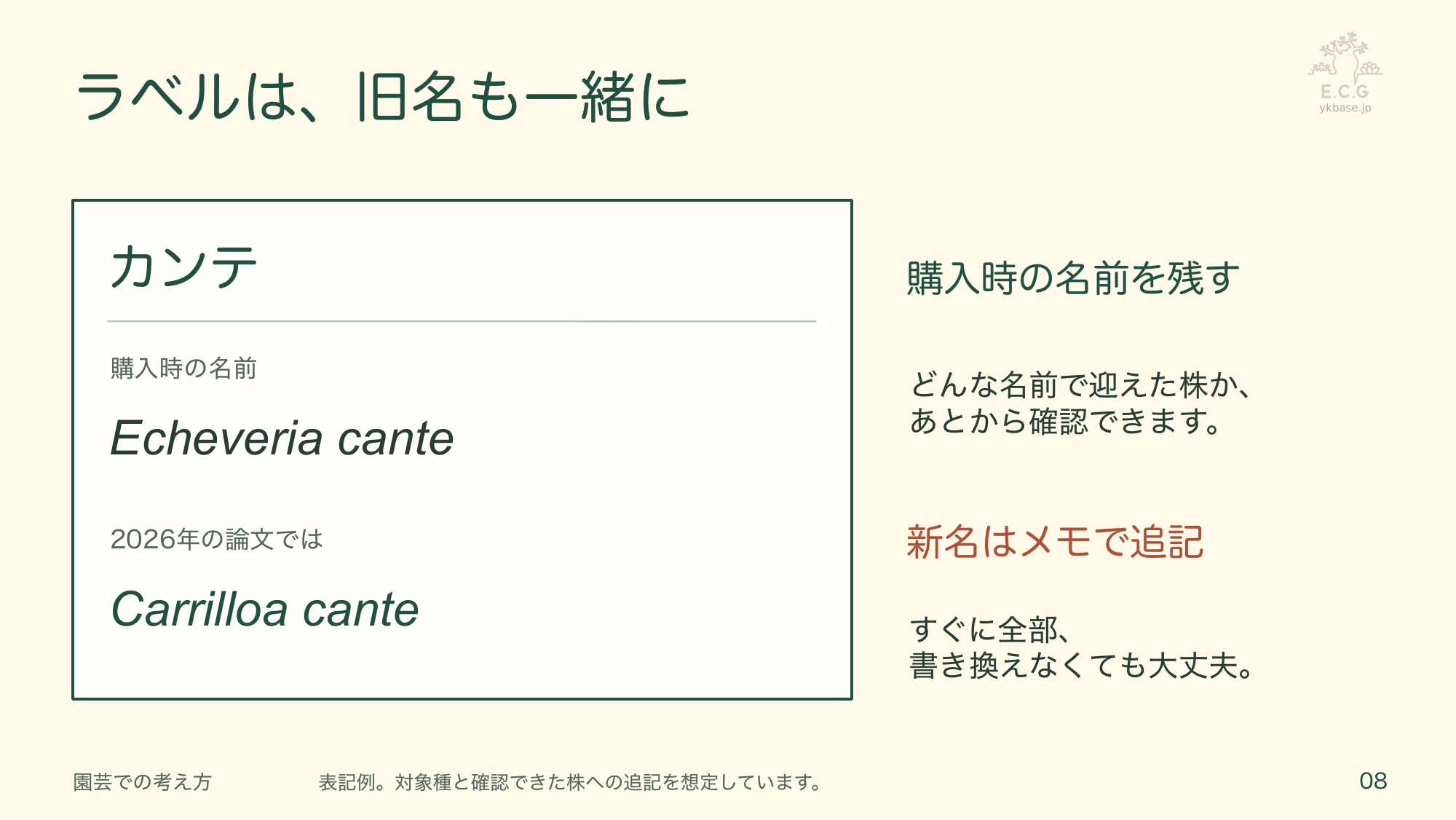
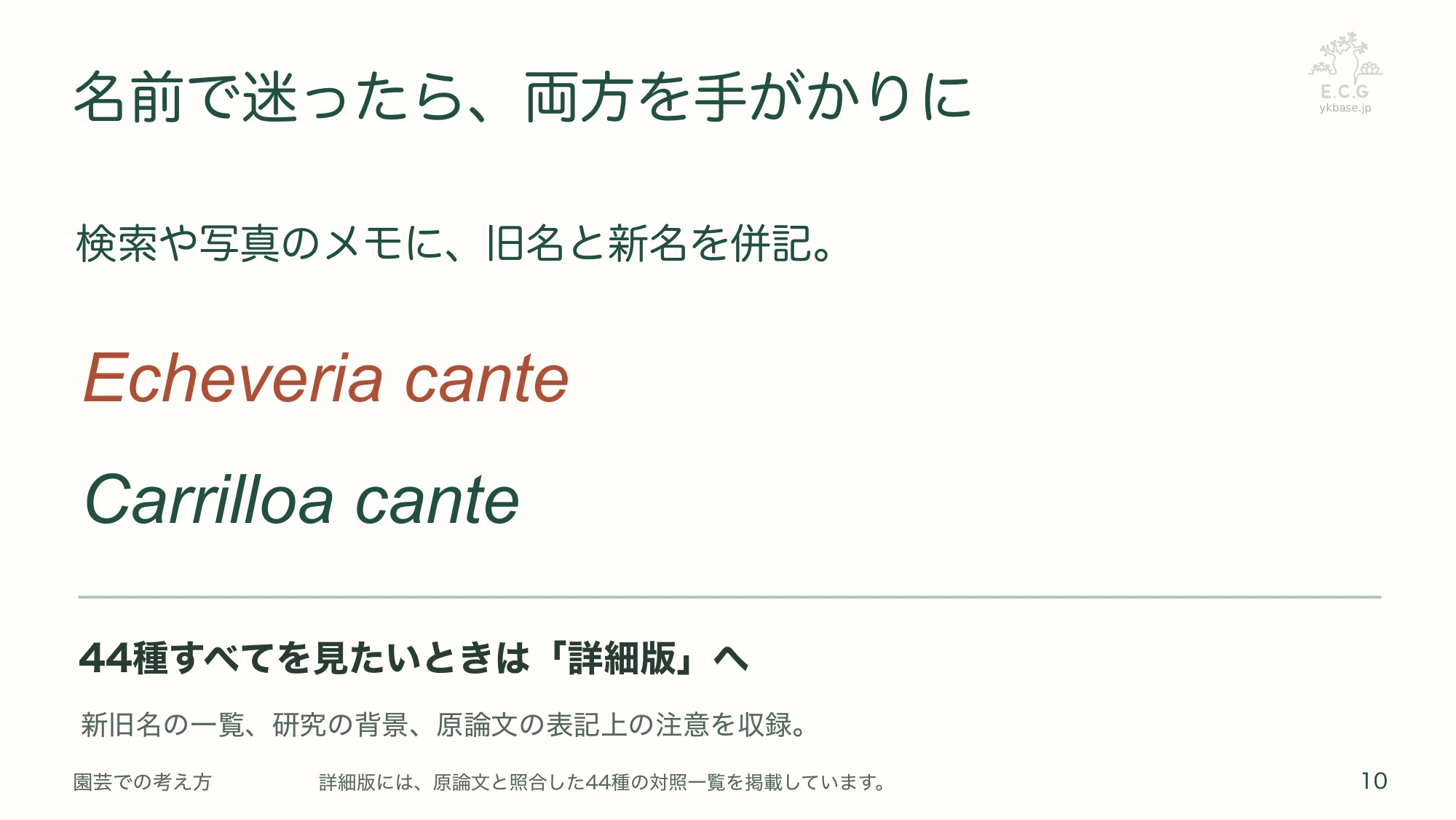
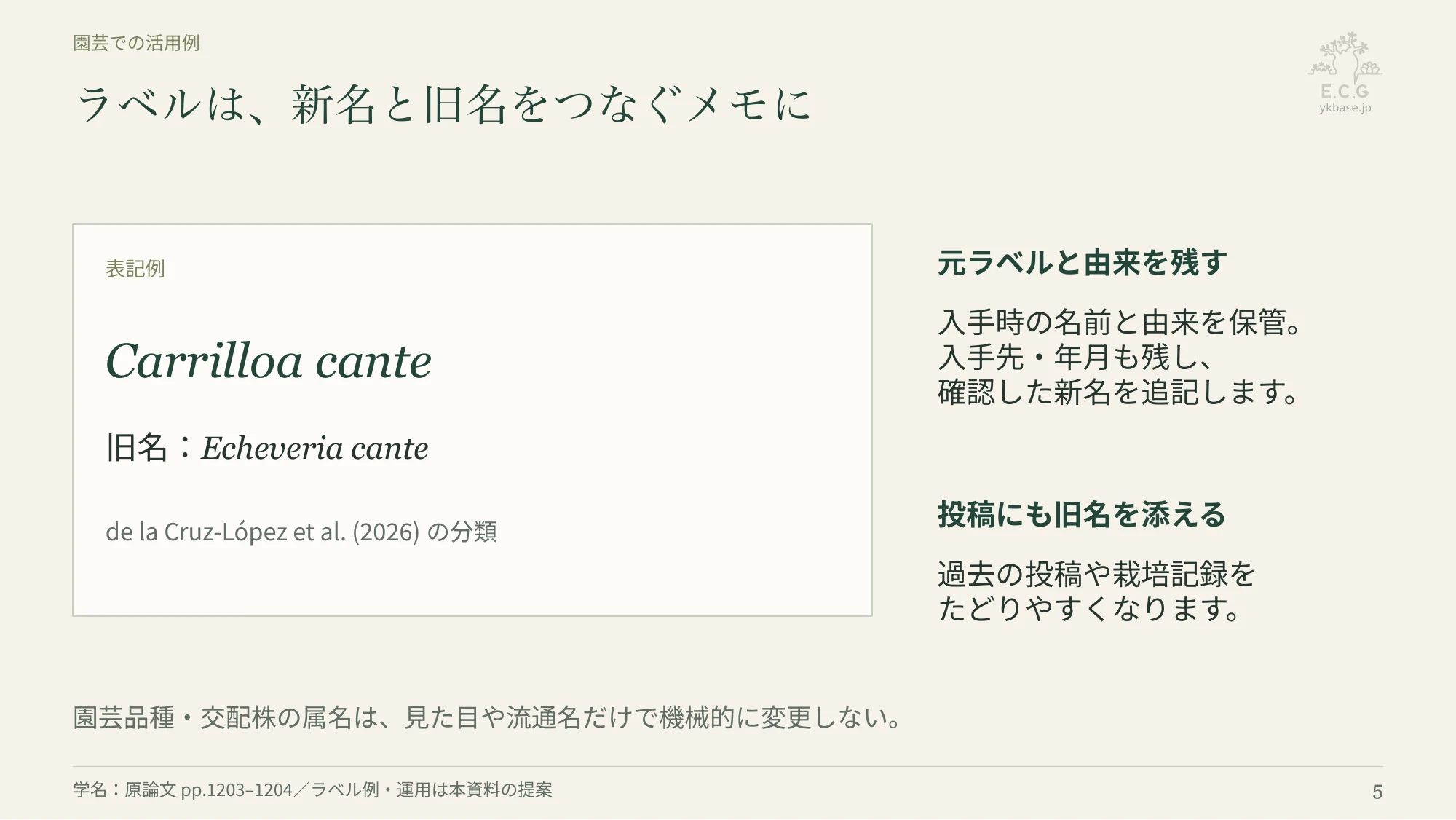
ラベルは、旧名も一緒に。Keep the old name on the label.
購入時の名前と由来を残し、対象種と確認できたら、新名をメモで追記。昔の図鑑や投稿、栽培記録もたどりやすくなります。Keep the name and provenance recorded when you acquired the plant. Once its identity is confirmed, add the new name as a note. This keeps older books, posts and growing records useful.
ラベルの記録例 · カンテExample label · cante
- 入手時の名前Name when acquired
- Echeveria cante
- 2026年の論文ではIn the 2026 paper
- Carrilloa cante
園芸品種や交配株は?What about cultivars and hybrids?
個々の園芸品種・交配株の名前は、この論文だけでは決まりません。見た目や流通名だけで新しい属名に置き換えず、購入元の記録や親の情報を確かめながら扱いましょう。The paper alone does not determine names for individual cultivars or hybrids. Avoid changing their genus simply on the basis of appearance or a trade name; check provenance and parentage.
概要版 7–10ページOverview, pages 7–10 · 詳細版 5–7ページFull guide, pages 5–7
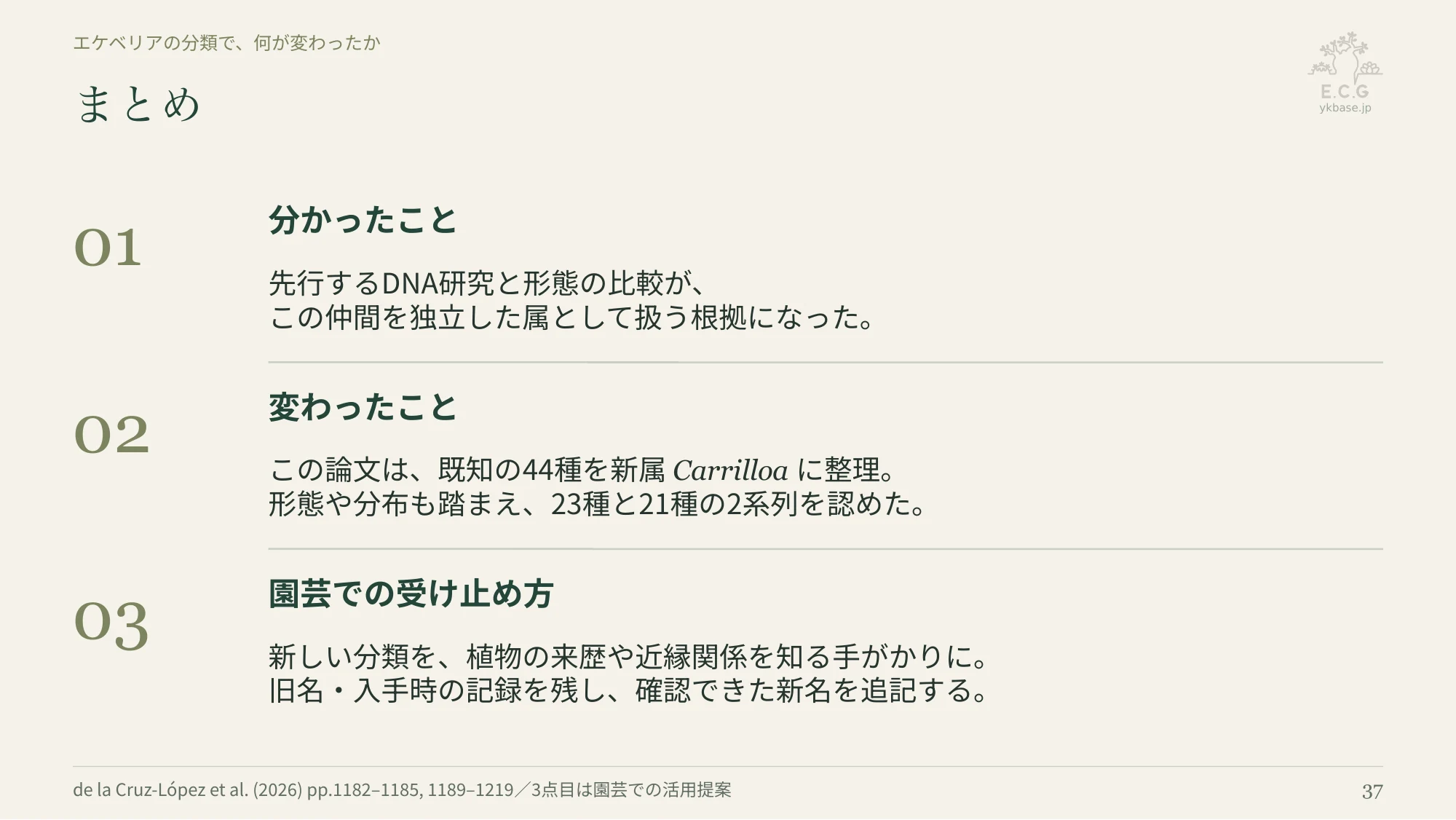
名前を、植物を知る手がかりに。Let the names help you know your plants.
44種の新旧名を調べるLook up the 44 species